The crisis of democracy: rethinking civic futures through the case of Lebanon. (3/4)
Victor Jardin - 12/01/2026
Around the world, democracy is being severely tested, and Lebanon offers a striking reflection of this trend. Decades of corruption and political paralysis have eroded public trust. Yet, at the heart of the collapse, new civic movements and voices from the diaspora continue to fight for change.
This series explores these efforts to reclaim political space. The first interview, with activist Layal Beyhum, examined how Lebanese youth and the diaspora have been redefining civic engagement since the 2019 uprising (click here). The second, with Michel Helou, Secretary of the National Bloc, discussed the role and responsibility of Lebanese politicians and their parties in the democratic crisis facing Lebanon (click here).
Through the interviews that follow, the series pursues a question that goes far beyond the Lebanese case: when institutions collapse, can citizens reinvent democracy from the ground up?
Cette série explore ces efforts pour reconquérir l’espace politique. Le premier entretien, avec l’activiste Layal Beyhum, s’intéressait à la manière dont la jeunesse et la diaspora libanaises redéfinissent l’engagement civique depuis le soulèvement de 2019 . Le deuxième, avec Michel Helou, secrétaire du Bloc National évoquait le rôle et la responsabilité des hommes politiques libanais et de leurs partis dans la crise démocratique à laquelle le Liban fait face .
À travers les entretiens qui suivent, la série poursuit une question qui dépasse largement le cas libanais : lorsque les institutions s’effondrent, les citoyens peuvent-ils réinventer la démocratie par le bas ?
“Lebanon must learn to use all its resources, starting with civil society”.
Interview with Nabil Barbir.
Nabil Barbir is a Lebanese civil society actor and the author of a thesis on the link between the structure of NGO networks and their effectiveness, focusing on those that emerged after the Beirut port explosion. He has worked with Live Love Lebanon, an organization that led one of these major networks—the Beirut Relief Coalition—where he helped raise awareness among the Lebanese government and civil society about collaborative governance, the localization of humanitarian aid, and development.
AL Mawja: For our readers, could you define what you mean by collaborative governance?
Nabil Barbir: The idea behind collaborative governance is to encourage public institutions to work hand in hand with civil society, in order to deliver public services that the government is unable to provide and to make the public sector more participatory. Ultimately, collaborative governance seeks to create stronger links between citizens and the state through civil society. In Lebanon’s case, collaborative governance is above all useful for managing the crises (security, economic, and others) that the country is going through. This was the objective of the 3RF (Reform, Recovery and Reconstruction Framework), a mechanism designed to structure the response to the crisis. Launched in December 2020 after the Beirut port explosion, it was the first genuine attempt at collaborative governance in Lebanon.
For the first time, an institutional framework brought together the government, civil society, the private sector, and international donors around the same decision-making table. Structured around four pillars (governance and accountability, jobs, social protection, and public services), it aimed to transform the emergency response into a sustainable and inclusive reconstruction project. Unfortunately, the initiative was slowed down by political deadlock and heavy politicization, which generated real frustration among the actors involved. Nevertheless, despite these limitations, the 3RF remains a pioneering experience, praised for having opened an unprecedented space for dialogue and cooperation between the state and civil society—a valuable foundation for rethinking long-term governance in Lebanon. It is currently in the process of being reactivated, and a new, more reform-minded government could, I hope, be more open to this type of approach.
My thesis focused more specifically on the impact of the structure of NGO networks on their effectiveness in the post–Beirut explosion context. At that time, large humanitarian networks were formed to compensate for the failure of the state.
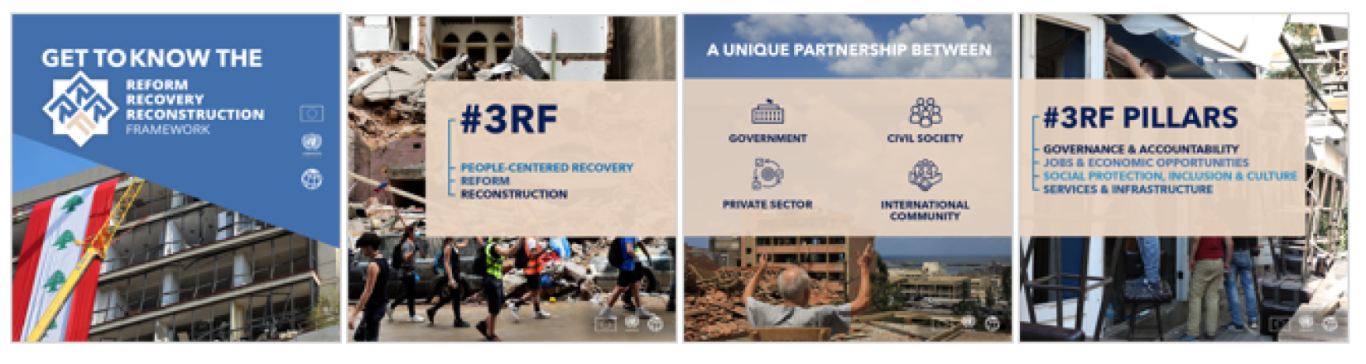
3RF presentation. Crédits: 3RF.
Al Mawja: Your study compares two networks: the Beirut Relief Coalition (BRC) and Uniting Lebanon (UL). What do these experiences reveal about the strengths and limitations of each network structure?
Nabil Barbir: I analyzed these two networks using a theoretical framework on forms of network governance. Three main models are distinguished:
- The lead organization network (a vertical structure with a central actor);
- Shared governance (a horizontal structure in which all organizations participate on an equal footing);
- And an intermediate model, the network administrative organization (NAO), in which a specific entity is mandated to coordinate the network, somewhat like a permanent secretariat.
I then evaluated these structures according to several performance criteria:
- The level of trust among members (willingness to accept vulnerability),
- The number of participants,
- The degree of consensus on the network’s objectives,
- The presence of specific skills necessary for coordination (network-level competencies).
The BRC corresponded to a vertical model: a lead organization (Live Love Beirut) centralized management, resource allocation, and communication. Although hierarchical, this structure proved highly operationally effective, especially in the post-explosion emergency, thanks to a clear relationship of trust between the center and the members. By contrast, UL adopted a horizontal, more democratic form of governance, but with more than one hundred participating organizations. This multiplicity strengthened the network’s legitimacy but slowed decision-making. In this type of configuration, the absence of centralized coordination requires a much higher level of trust and consensus, which is difficult to sustain over time.
My findings therefore show that effectiveness depends on balance: too much centralization limits participation, while too much horizontality dilutes coordination. In practice, the most effective model is often a hybrid NAO, combining central coordination with participatory governance.
Al Mawja: Does this mean that a network cannot function without strong leadership?
Nabil Barbir: Not necessarily “strong,” but clear and legitimate.
An effective network does not need a leader who imposes decisions, but rather an actor or body capable of orchestrating cooperation, maintaining coherence, and ensuring accountability. This is a form of distributed leadership—a leadership of facilitation rather than domination.
It is also important to recognize the structural limits of direct democracy: in a small group, like the Greek agora, collective deliberation works; at a large scale, mechanisms of mediation and coordination are necessary. Collaboration does not replace coordination; it depends on it.
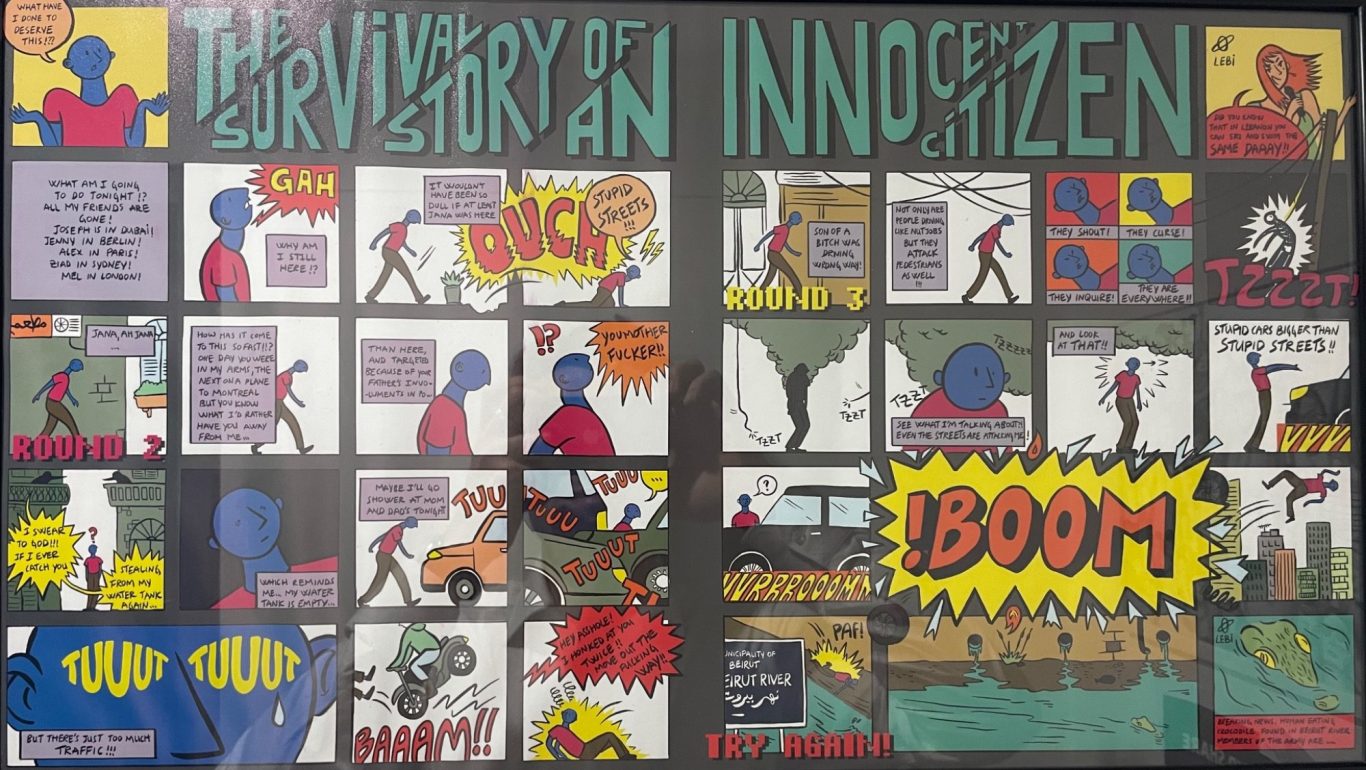
Bande-dessinée satirique décrivant les épreuves du quotidien pour tout citoyen libanais. Crédits: Victor Jardin.
Al Mawja: You nevertheless point out that UL, despite its slowness, helped break down communal barriers. Can we say that its effectiveness was primarily social?
Nabil Barbir: Absolutely. While UL was less effective from a logistical standpoint, it played a decisive role in rebuilding the social fabric. It brought together associations from very diverse religious communities, regions, and social backgrounds around shared objectives: assistance, health, housing, and education. In a country where the confessional system has fragmented society, this dynamic of cross-communal cooperation is in itself a political victory. UL thus embodied social and symbolic effectiveness, whereas the BRC embodied operational effectiveness.
The two experiences, which are complementary, show that collaborative governance is not a single model but rather a spectrum of approaches whose success depends on context, the number of actors involved, the level of trust, and the nature of the objectives pursued.
Al Mawja: Some describe Lebanon as a “Republic of NGOs.” What do you think of this expression?
Nabil Barbir: NGOs have been necessary to fill the gaps left by the state. Their role is not to replace the government, but to provide essential services when it fails to do so.
However, this should not be exaggerated: speaking of a “Republic of NGOs” is a slogan rooted in propaganda. Humanitarian NGOs neither have the means nor the mandate to develop the country. They are complementary, not substitutive. And it must be remembered that their budgets are in no way comparable to those of the state.
The real problem is that we have a state without a nation: a system inherited from a mix of Ottoman institutions, the French constitution, and the confessional compromise of Taif. This system must give way to a model that mobilizes all of the country’s resources, starting with its civil society, which is strong, organized, and connected to international funding.
Al Mawja: You mention the Lebanon Humanitarian and Development Fund (LHDF) as an example of good governance. Could you elaborate?
Nabil Barbir: The LHDF brings together around 90 NGOs and operates with strong and transparent governance. It is now one of the most effective networks.
However, it remains only partially representative: each region has its own networks, and centralization remains difficult. The future likely lies in “localization”—strengthening local NGOs, which are often highly mobilized but underfunded, especially since the gradual withdrawal of USAID.
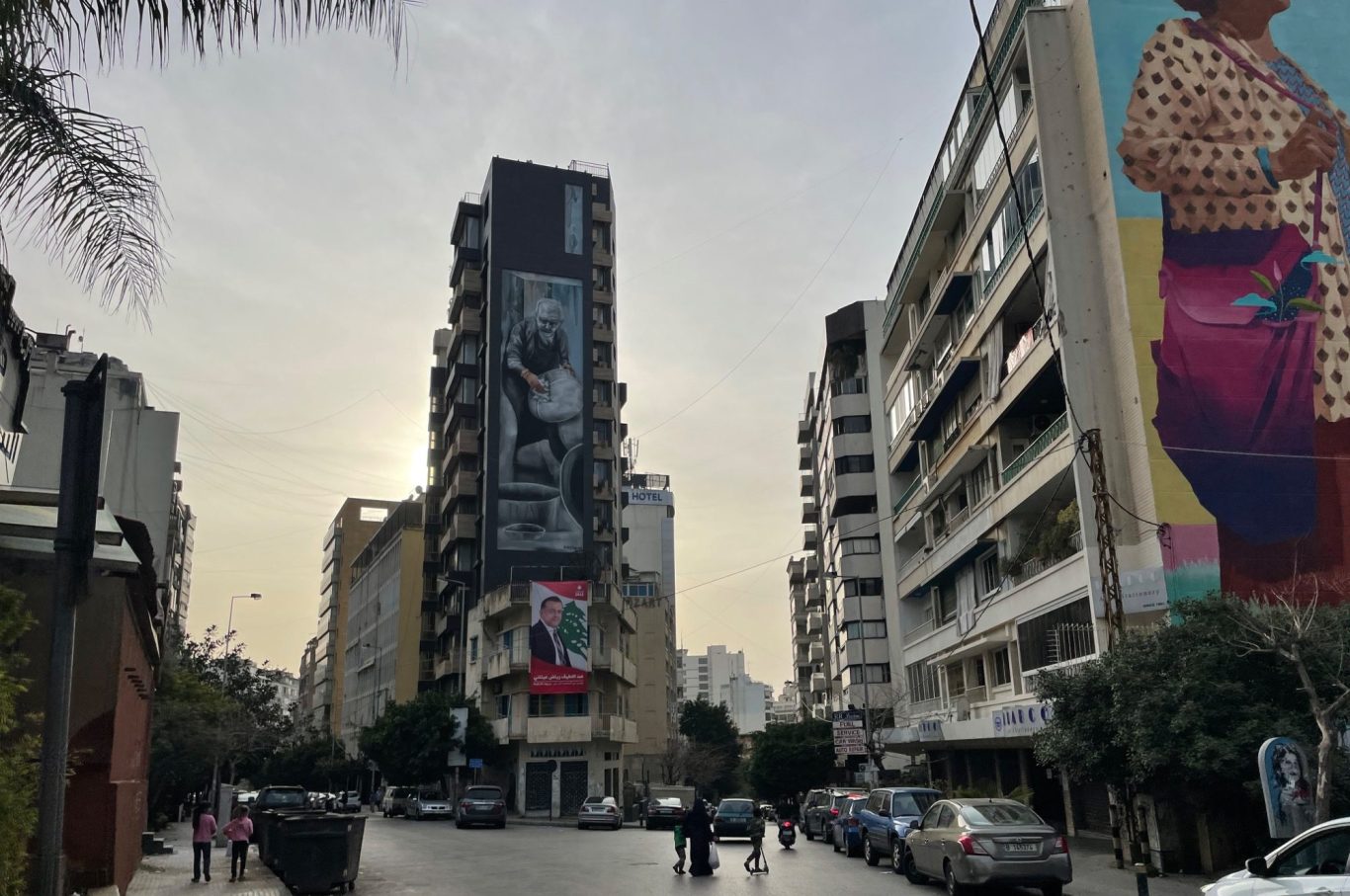
Hamra district, Beyrouth. Crédits: Victor Jardin
Al Mawja: How is the reduction in international funding reshaping the landscape?
Nabil Barbir: The system is undergoing a profound transformation: declining funding is pushing actors to refocus on the local level. The example of the RDPP, a program bringing together several European countries, is particularly interesting. Instead of directly funding large international NGOs, they are creating local units responsible for selecting and supporting projects led by local NGOs.
This is a far more effective model than that of large UN agencies, which are too heavy and too detached from realities on the ground. I believe this is the direction we are heading—toward decentralized and contextualized forms of governance.
With the recent funding cuts, I expect a major transformation of the humanitarian and development landscape. We are already witnessing a significant reduction in the global presence of the United Nations, as well as a downsizing of international NGOs. In this context, networks such as the LHDF are likely to play a much greater role in the future.
Large local NGOs (notably those sitting on the LHDF steering committee), which have extensive experience and strong institutional capacities, will eventually assume functions currently carried out by international NGOs: leading projects transparently through sound governance systems, providing capacity building, and playing a greater role in decisions related to funding allocation.
This model is more contextualized, locally driven, and more cost-effective. It could help improve a sector that has, to some extent, become complacent, slow, and at times disconnected from realities on the ground.
Al Mawja: Do you think the Lebanese state could draw inspiration from collaborative governance to restore citizens’ trust, and can these forms of cooperation become a sustainable alternative to traditional institutions?
Nabil Barbir: Yes, provided that the state agrees to change its role: it must become an arbiter and coordinator rather than the exclusive owner of power. Collaborative governance does not seek to replace the state, but to restore its meaning and legitimacy by promoting shared decision-making among institutions, civil society, municipalities, and the private sector.
A telling example is the waste management project recently proposed by a collective of Lebanese NGOs. Still at the draft stage, this plan envisions structured cooperation between the government, local authorities, and specialized organizations such as Arcenciel, Live Love Recycle, and Cedar Environmental. The idea is to pool expertise to build a national strategy based on waste sorting at the source, waste valorization, and local energy production, while also training municipal officials in circular economy practices.
Even though it has not yet been implemented, this project illustrates the potential of horizontal and inclusive governance: when public and civil actors engage in dialogue, solutions become more realistic, better accepted, and more sustainable. It is in this sense that collaborative governance can serve as a laboratory for rebuilding the state—not by bypassing it, but by reconnecting it with society.
Al Mawja: Your research also mentions the role of digital tools. Can they transform Lebanese governance?
Nabil Barbir: Absolutely. Digital tools are changing the rules of the game: they enable smoother coordination, greater transparency, and participatory decision-making, even at large scale. This challenges the idea that too many participants necessarily weaken a network.
Today, many local NGOs are looking into artificial intelligence to optimize their work despite limited human resources. The movement is slow, but promising.