Antakya: The rise, fall and reconstruction of a Levantine crossroads
Clément Guermeur - 16/03/2026.
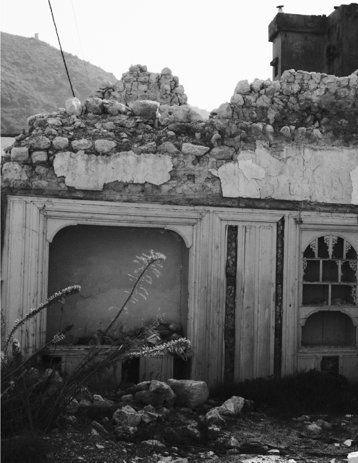
February 2023. Within hours, a series of devastating earthquakes erased vast swaths of Antakya along with centuries of a singular urban history. A Levantine crossroads between Anatolia and the eastern Mediterranean, Hatay's capital was more than a city: it was a living palimpsest, where Syriac churches and Sunni mosques, Arabic-speaking markets and Ottoman alleyways, Armenian memory and Alawite tradition had long coexisted. What the earthquake left standing, the bulldozers have since removed in the name of reconstruction. A new city is now rising over the rubble of the old: standardized, planned, and largely foreign to what it replaces. This photo essay documents the in-between : neither ruin nor renaissance, but the suspended moment in which a city struggles to remember what it was.
Antakya’s Markets, Courtyards and Churches: Provincial Capital with a Levantine Soul.
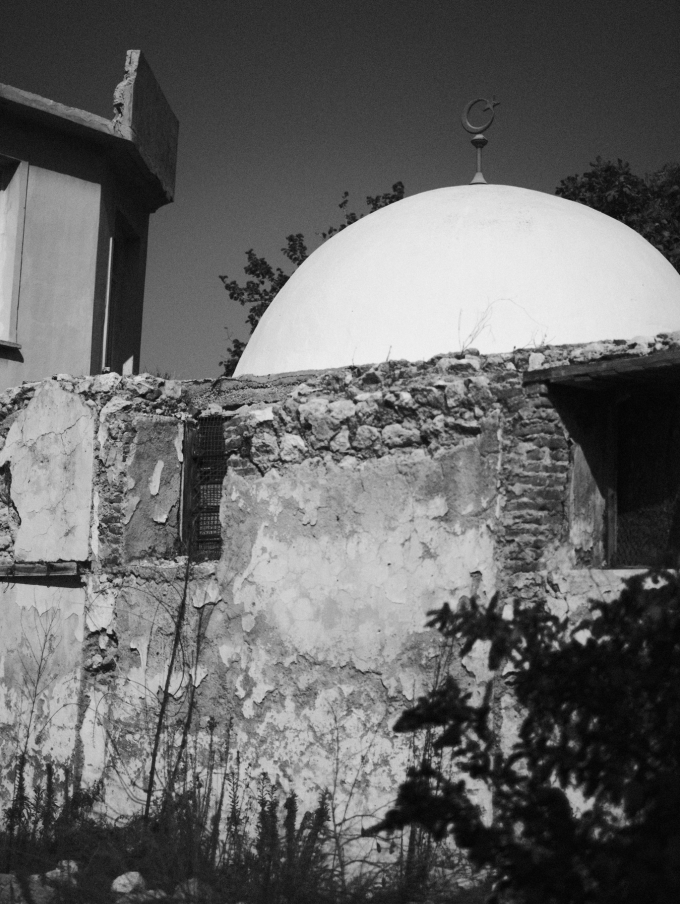
Finding one’s way through Antakya, the core of the devastated province of Hatay in southeastern Turkiye, is far from being an easy task, even 3 years after the earthquakes that hit the region in February 2023.
Neither fully Anatolian nor Levantine, Hatay has always represented a singular position in the Eastern Mediterranean. At the crossroads of trade routes linking Anatolia, Mesopotamia and the Syrian coast, Antakya, ancient Antioch, once rivalled Alexandria and other major cities as one of the great urban centres at the time.
The city radiated politically, intellectually and religiously with strong influence far beyond its immediate territory, notably as a significant cornerstone in Christian history, but also last century as a major subject of negotiation between the French, Syrian and Turkish governments, with far reaching geopolitical implications. Its ports, agricultural plains and urban markets sustained exchanges between Aleppo, Latakia, Beirut and Anatolia, anchoring the region as one of the most key posts between the Levant and Anatolia.
Beyond this rich history, the province of Hatay is also a true mosaic of faith and beliefs: it is one of the most ethnically and confessionally diverse districts in Türkiye. Long shaped by Levantine circulations and French colonial recompositions, the province hosts Greek-Orthodox and Syriac churches, an Armenian enclave, Maronite traditions, Sunni mosques, a synagogue and Alawi shrines, especially along the coast and the Syrian border, making it a visibly dense religious landscape.
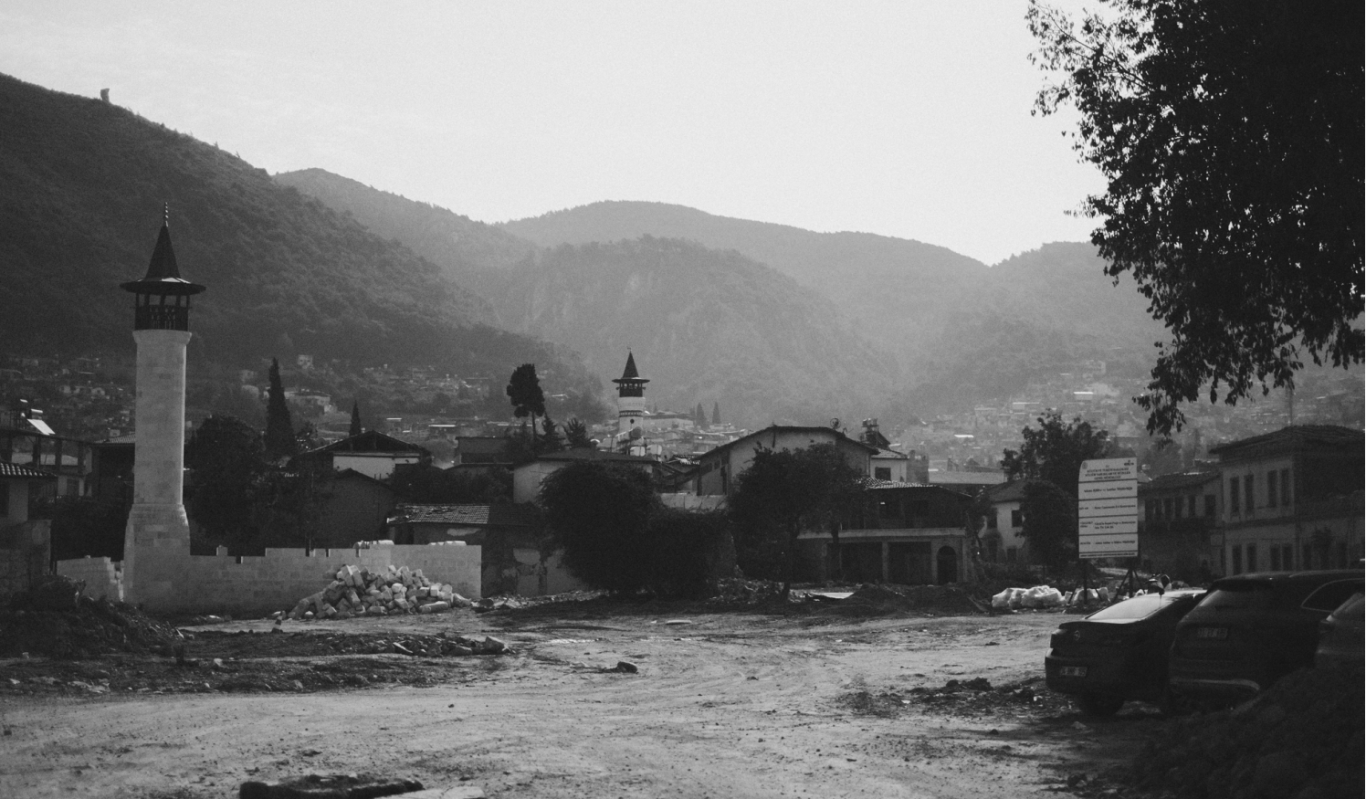
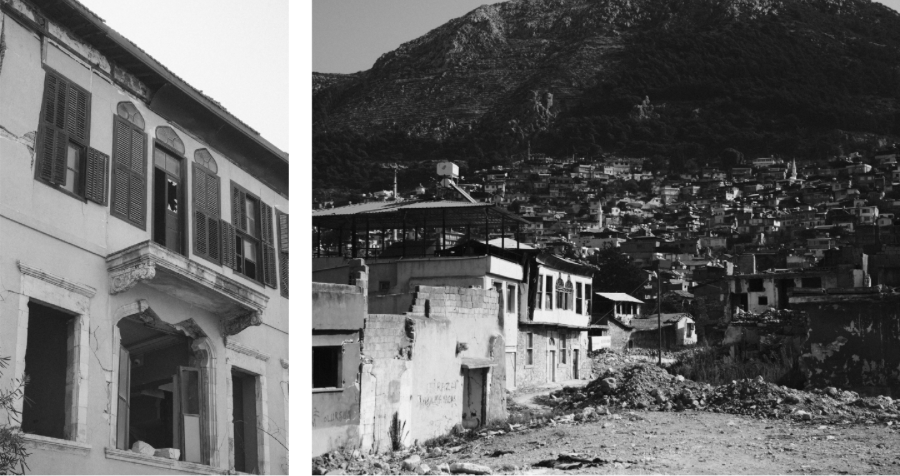
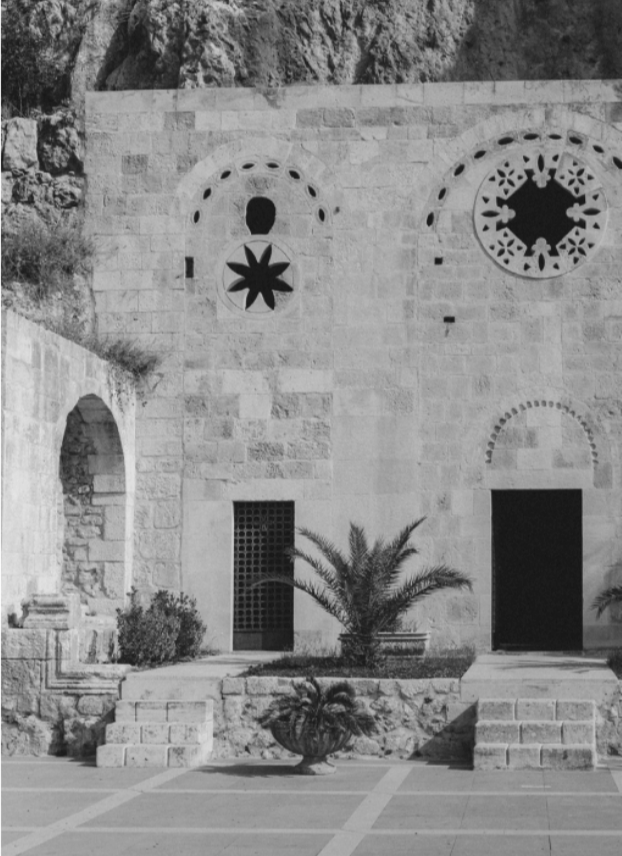
Many architectural, cultural and linguistic aspects echo this rich, layered history: Arabic and Turkish intermingle in markets, the local architecture blends Ottoman layouts and Levantine references: courtyard houses, stone vaults, shaded arcades and narrow alleyways evoked older Mediterranean urban forms, distinct from the standardised housing blocks now dominating many contemporary Turkish cities.
The city of Antakya represented a testimony of this religious coexistence, unique architecture, and was famous for its markets, its narrow, pedestrian streets in all of the ancient city, bordered by stone vaults, courtyard houses or shaded arcades, making it a key touristic destination in Türkiye.
The disasters that hit Antakya: how to grieve a disappearing city?
In February 2023, the series of devastating earthquakes that hit this region of Türkiye and Syria had a specially dire impact on Antakya, cited by many as one of the most painful destruction given how much of the city was reduced to rubble and the extent of architectural heritage lost.
Entire districts collapsed, erasing centuries of history, killing tens of thousands of inhabitants and displacing even more. Beyond the sheer physical destruction, the disaster also shattered social structures, neighbourhood
solidarities, local habits, replacing this dense urban life with a very fragmented addition of emergency and
provisional shelters.
As reconstruction begins, the city faces a second rupture. To make way for the ‘Modern City’ promised by the authorities through large-scale publicity campaigns advocating for a city getting back on its feet, rising ‘from
the ashes’ like a Phoenix, large-scale demolition and standardised rebuilding gradually destroy the dense urban
fabric that made the charm of the city. It raises questions about the future of Antakya’s identity, its memory,
belonging and the right to remain. In a territory already under pressure and fragilised by regional conflicts, the
earthquake is a violent accelerator of demographic, spatial and cultural changes.
Can the tabula rasa erase the wounds, or does it make them more painful ?
The physical devastation in the damaged areas did not end after the February earthquakes.
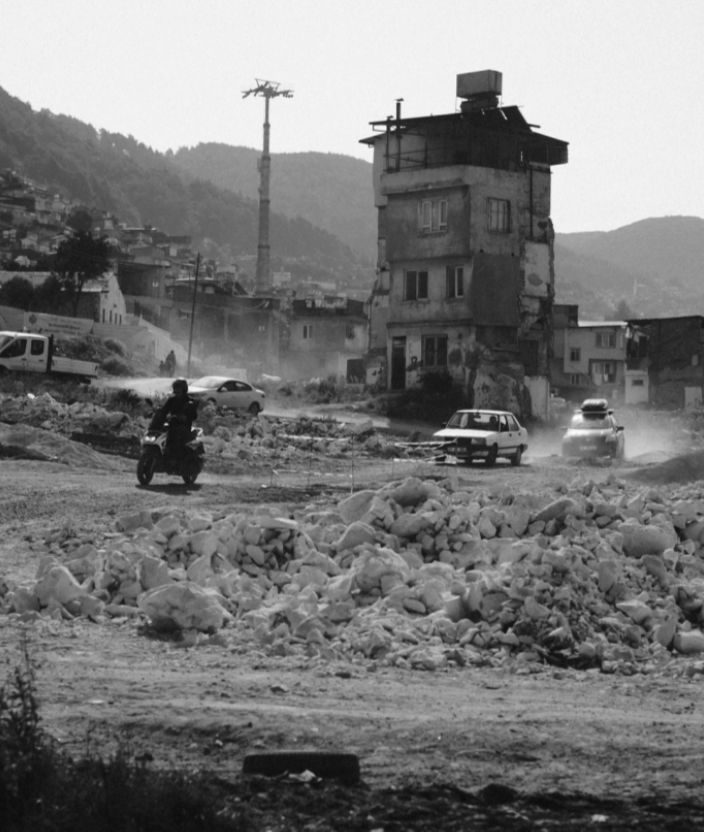
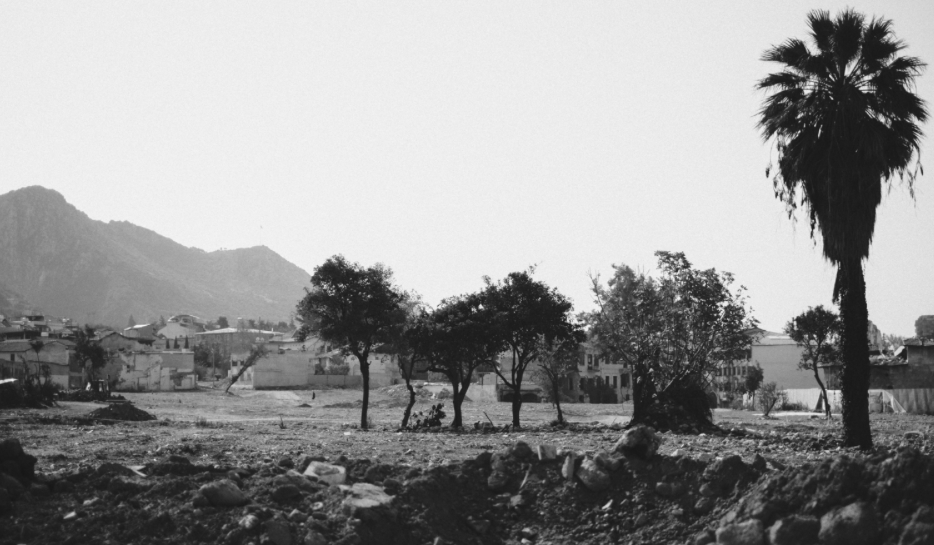
From spring 2023 onward, a second, voluntary wave of destruction took place: the systematic demolition of vast urban areas deemed unsafe, unstable, or incompatible with the government’s reconstruction strategy and the masterplans designed. Under emergency legislation, entire neighbourhoods were flattened. Not only fragile or destroyed structures were demolished, but also partially standing buildings, historic housing blocks, commercial streets, and fragments of the old city.
By mid-2024, official figures indicated that more than 200,000 buildings across the earthquake zone had been demolished, with Hatay accounting for one of the largest shares. The process continues: convoys of trucks loaded with rubble file out of the city day and night, carrying away debris and the material traces of life in a constant rumble.
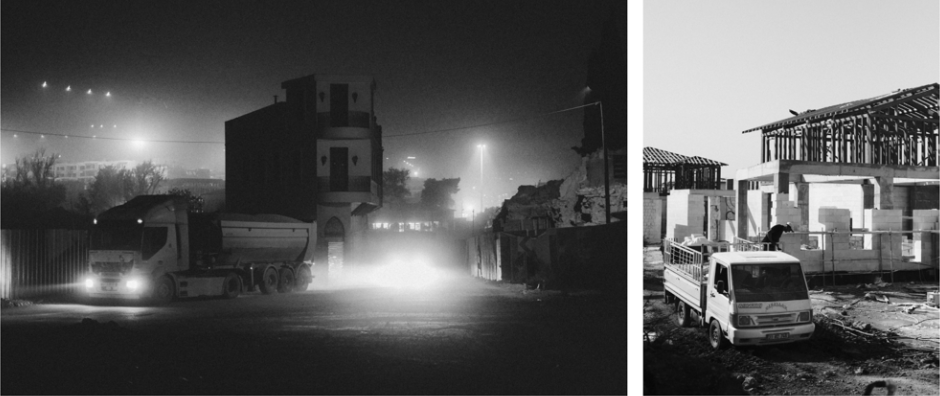
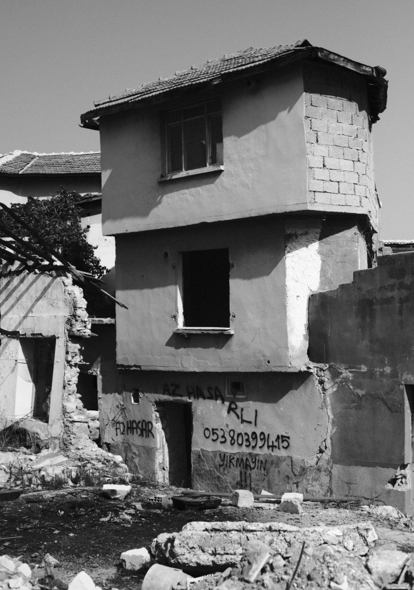
At first, one believes the earthquake has already taken everything. Then comes the realisation that demolition can exceed the violence of the quake itself, and that the city can be even more flattened.
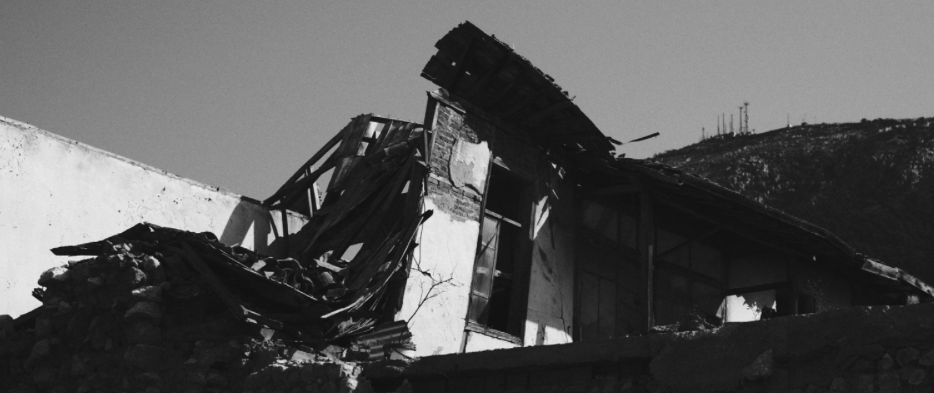
This secondary erasure brings a longer and more intricate form of violence on the residents, marking the irreversibility of the loss as the rubbles from the destroyed houses are taken away. While damaged buildings still carried traces of memory, their demolition erased spatial reference points entirely. Only a handful of fragments of façades, staircases, cupboards or doorways still stand, testifying of the past domestic life in between these walls. These fragments can let you guess where rooms once were, or the outline of a street, but they are very rare at this stage in Old Antakya.
The rest of the landscape is widely unrecognisable, as ruins were replaced by vast, flattened expanses, stripped of orientation, scale, in which it is hard to find meaning, or a sense of direction.
What to do the day after? The long, contentious process of rebuilding Antakya
To step into Antakya today is to enter a construction site the size of a large city, with cranes pivoting in every direction in your horizon.
Temporary container settlements line the periphery, and new apartment blocks rise in worrying geometric repetition on top of former heritage areas or on land that had remained untouched until recently.
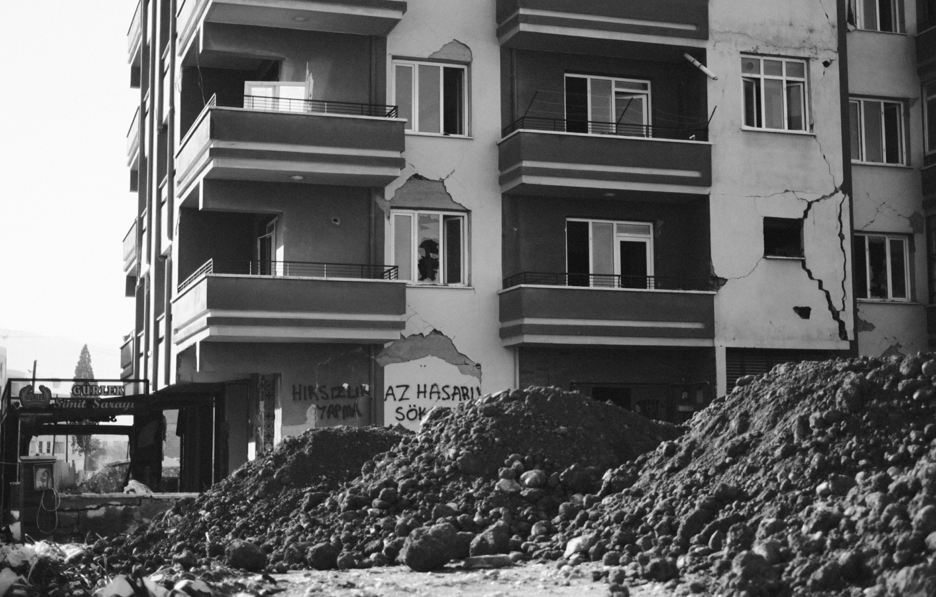
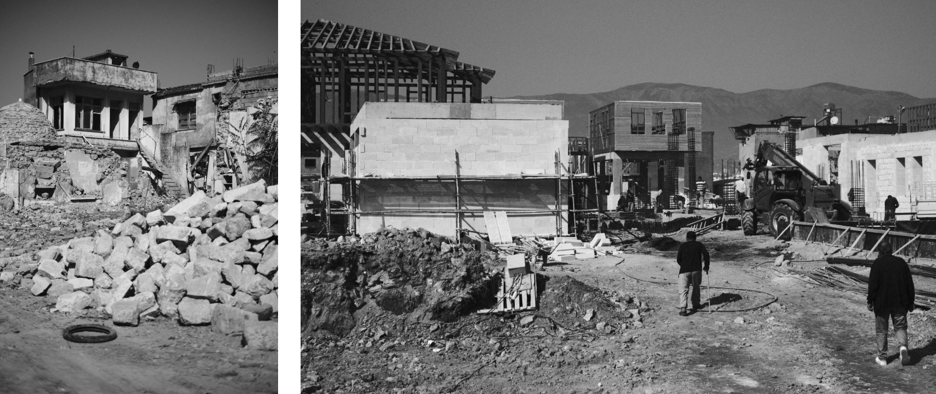
How does one orient oneself in a city where streets have disappeared?
Who draws the lines of the new Antakya, and how?
Where have former residents been relocated, and how far from their previous lives?
Who arrived to join the reconstruction workforce, and where do they sleep in a city of provisional shelters?
What becomes of houses left half standing, neither ruin nor home?
When do temporary markets and container neighbourhoods cease to be temporary?
With stepping foot in a city being rebuilt comes a cascade of questions, and much less answers.
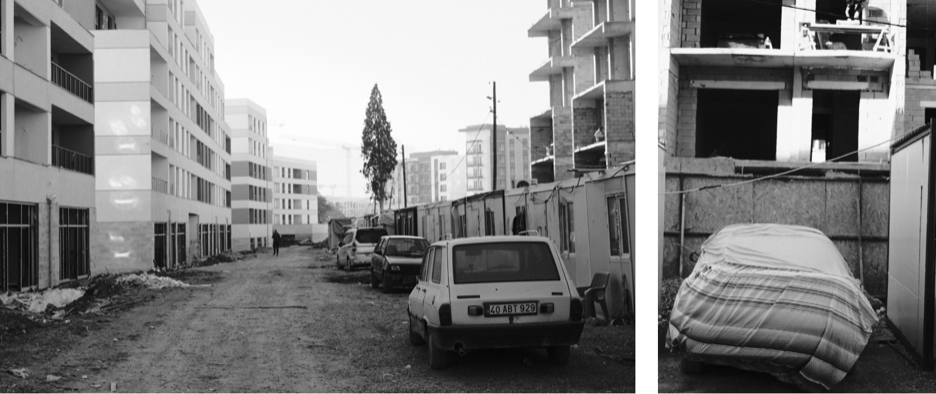
In the end, who decides what deserves to be rebuilt, what can be replaced, and what is allowed to disappear?
These questions stretch beyond buildings, and touch governance, displacement, labour, heritage, and the meaning of return. They sadly resonate with many other places in a region where cycles of catastrophe and reconstruction seem dramatically frequent, and where the bulldozer is faster than the pen.