World-Cities of yesterday and today, Crossroads between East and West: Abu Dhabi and Dubai in the lineage of Samarkand and Baghdad ?
Victor Jardin, 01/10/2025.
From Baghdad to Samarkand, crossroads of ancient routes, to Dubai and Abu Dhabi, hubs of hypermodernity, the Middle East has continually reinvented its world-cities. How did these places turn the periphery into a vital center? Which forces—trade, knowledge, diversity—fueled their global reach? And what remains today of that legacy: continuity, or rupture?
Since Antiquity, the Middle East has been the privileged point of contact and exchange for the Eurasian continent. Between the Mediterranean and the Indian Ocean, this region transformed its strategic location into a true workshop of wealth and knowledge, giving rise to illustrious civilizations. At every age, a ruling power embodied the role of bridge between East and West, and the capitals of these states—whether imperial or monarchical—became genuine world-cities, where tolerance was elevated to a cardinal virtue, the only one capable of guaranteeing and nurturing exchange, trade, and the enrichment it produced, both material and immaterial.
As inhabitants of the twenty-first century, we are the saddened witnesses of a Middle East—in the broad sense, from the Levant to Persia—in tatters. For nearly a century, history has seemed to batter this dispossessed, disoriented region. The borders drawn by the Sykes-Picot agreements and ratified by the Treaty of Sèvres created states with plural populations, allowing outside powers to maintain their influence by wielding the maxim “divide and rule.” These national creations, hasty and often unfinished, have ceaselessly fueled internal conflicts—from the Israeli-Palestinian conflict to the Lebanese civil war, not to mention the Iraqi and Syrian civil wars—and hindered regional development.
And yet the eternal wealth of this region continues to shine through the walls of its cities and the culture transmitted from generation to generation, even though it seems frozen in a bygone past.
At the same time, we are also the witnesses of an extraordinary epic, dazzling in its speed: the creation, in barely half a century, of a new global center on the eastern edge of the Arabian Peninsula. The Gulf states—Saudi Arabia excluded—won their independence in the early 1970s and, endowed with abundant, even inexhaustible, economic resources, erected in the heart of the desert modern, hyperconnected states. Guided by two visionary leaders, Sheikh Zayed al-Nahyan and Sheikh Rashid al-Maktoum, the United Arab Emirates have become a new pole of attraction, exchange, and trade where people meet from Southeast Asia, Western Europe, the Indian subcontinent, East Africa, the Maghreb, the Americas, and beyond.
Behind what is often dismissed as superficiality—probably better understood as hypermodernity—are the UAE’s great cities not in fact taking up the torch of the Middle East’s world-cities, from Samarkand to Baghdad? At first glance, it is hard to imagine a link between the Gulf’s futuristic metropolises, like Dubai and Abu Dhabi, and the historic cities of the Middle East. And yet, across centuries and backdrops, the same logic repeats: cities that dream of being capitals of the world, places where flows, wealth, and cultures converge and amplify.
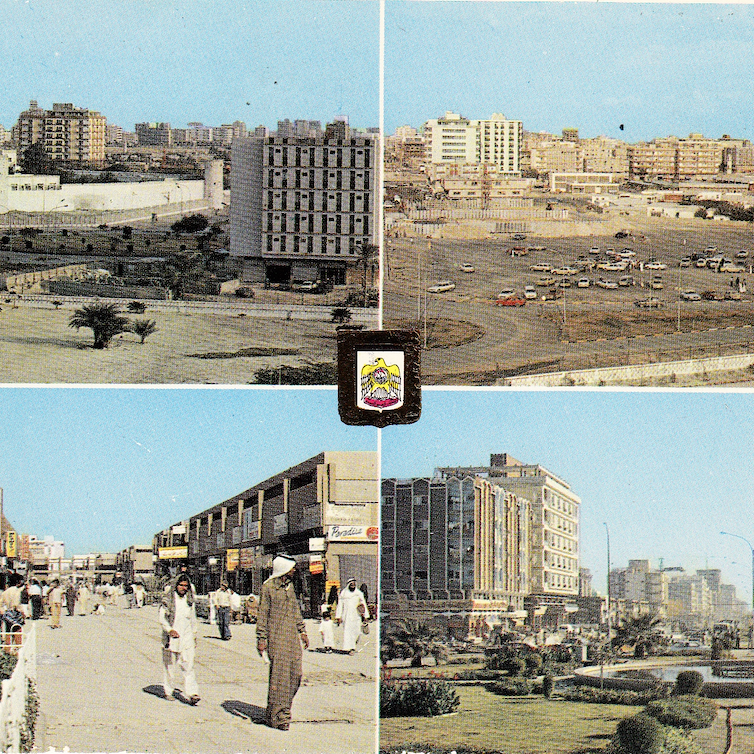
Photos of Abu Dhabi. Credits : Lest We Forget Archive, Postcard Courtesy Dr. Mohammed Al Mansoori
Baghdad, the Round City that wanted to contain the World
On the banks of the Tigris, in the eighth century, a capital arose unlike any other. When Caliph al-Mansur decided in 762 to found Baghdad, he did not build a city but a political manifesto: a “round city,” geometrically perfect, with the caliphal palace and the great mosque at its center. It was an act of power but also of projection: here, at the crossroads of caravan routes and Mesopotamian canals, the expanding Islamic world would be concentrated. As historian Hugh Kennedy notes, “Baghdad was conceived from the outset as an imperial capital, designed to dominate not only Iraq but the entire Dar al-Islam” (When Baghdad Ruled the Muslim World, 2005).
The city quickly outgrew its initial plan. Baghdad became one of the largest urban centers of the medieval world, probably surpassing a million inhabitants by the ninth century. The souks stretched endlessly, organized by specialty: spice merchants from India, dealers in Persian silks, metalworkers. Boats laden with dates and wheat crossed paths with caravans from China or Yemen. The city was a gigantic logistical hub: the Tigris and its canals irrigated crops and served as fluvial highways, while caravan routes linked Persia, the Levant, Arabia, and Central Asia.
But Baghdad was more than a market: it was a factory of knowledge. The famous Bayt al-Hikma, the House of Wisdom, financed by the caliphate, attracted translators from Syria, Persia, India, and Greece. Paper, imported from China, allowed the diffusion of manuscripts on an unprecedented scale. Dimitri Gutas, a specialist in Arabic philosophy, reminds us that the systematic translation of Aristotle, Galen, and Euclid was not intended as mere conservation, but as the provision of scientific tools useful to administration and astronomy (Greek Thought, Arabic Culture, 1998).
Cosmopolitanism was the watchword. Baghdad’s Jews played a crucial role in finance and international trade. Syriac Christians translated Greek medicine. Persian scholars invented algebra, while Indian astronomers refined celestial tables. This plurality was not simple tolerance but an economic necessity: the empire needed every skill to function.
Baghdad also staged itself. Caliph al-Ma’mun ordered the construction of observatories; palaces rivaled mosques in splendor. Urbanism was a demonstration: to show that the center of the world was here. For five centuries, the city shone as the beacon of a connected Eurasia. Its fall to the Mongols in 1258 remains a trauma: a world engulfed in blood and fire, the brutal end of an imperial dream.
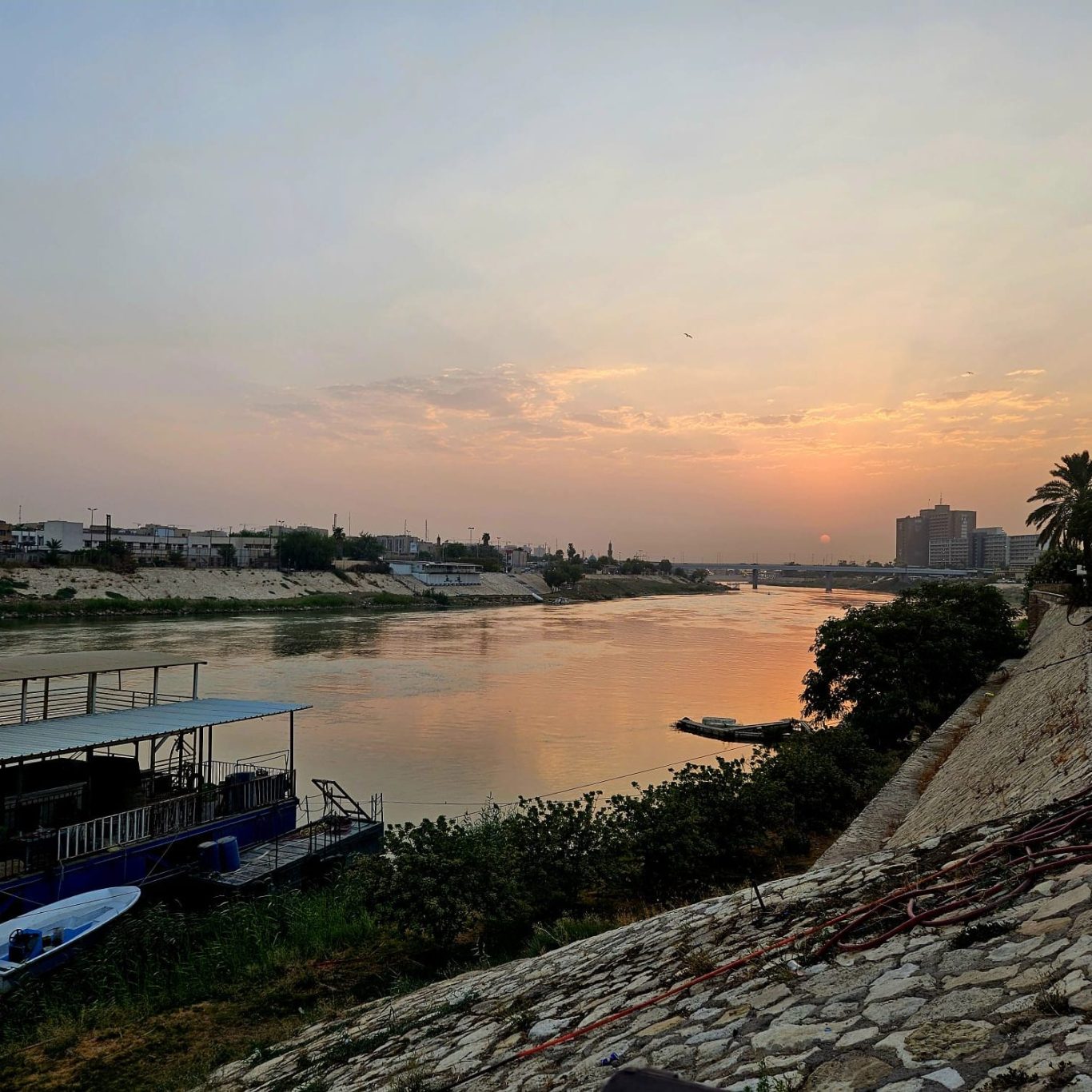
Baghdad - Credits : Victor Jardin
Samarkand, the capital of silk and stars.
Three thousand kilometers east of Baghdad, another city rose as a crossroads: Samarkand. Situated in Sogdiana, at the heart of Central Asia, it had prospered since Antiquity thanks to its strategic location on the Silk Road. The polyglot Sogdian merchants served as intermediaries between China and Iran, carrying silks, spices, precious stones, but also ideas and religions. The Chinese pilgrim Xuanzang, in the seventh century, already described a city “rich, populous, and cosmopolitan.”
It was with Timur—Tamerlane to the West—that Samarkand reached its apogee. At the end of the fourteenth century, the conqueror made it his capital and launched an ambitious program of construction. Captive artisans, brought from Damascus, Baghdad, or Shiraz, erected mosques, mausoleums, and madrasas of unprecedented beauty. The Registan became a monumental square, paved in turquoise ceramics and framed by gigantic portals. Beatrice Forbes Manz, historian of the Timurid world, describes it as an “urban staging of power,” where architecture was conceived as imperial demonstration (The Rise and Rule of Tamerlane, 1989).
Samarkand was at once a bazaar and an academy. Caravans from China unloaded silks and porcelains, those from India brought gems and spices, while the West sent glassware and cloth. Money flowed, changed hands, and sustained a rich artisanal economy: glazed ceramics, embroidered textiles, illuminated manuscripts.
Under Ulugh Beg, Timur’s grandson, the city experienced a golden age of science. His fifteenth-century observatory housed a giant sextant, forty meters high, one of the most precise ever built in the Middle Ages. Historian David King describes the building as “a cathedral of astronomical knowledge” (In Synchrony with the Heavens, 2004). Ulugh Beg’s tables, calculated in Samarkand, were used throughout the Orient until the seventeenth century.
A cosmopolitanism flourished: Persians, Turks, Arabs, Indians, and Chinese mingled in the markets. Religions overlapped—Islam, Buddhism, Eastern Christianities. As in Baghdad, this diversity was not accidental: it fueled a system of exchange that functioned only if each brought their skills and networks.
If Baghdad was the capital of a bureaucratic empire, Samarkand was that of an empire conquered by the sword, but dreamed through the arts. Its turquoise domes, still visible today, recall the time when, in the steppes of Central Asia, a city aspired to be the center of the world—not by the sea, but through the endless caravan routes and the constellations mapped by its astronomers.
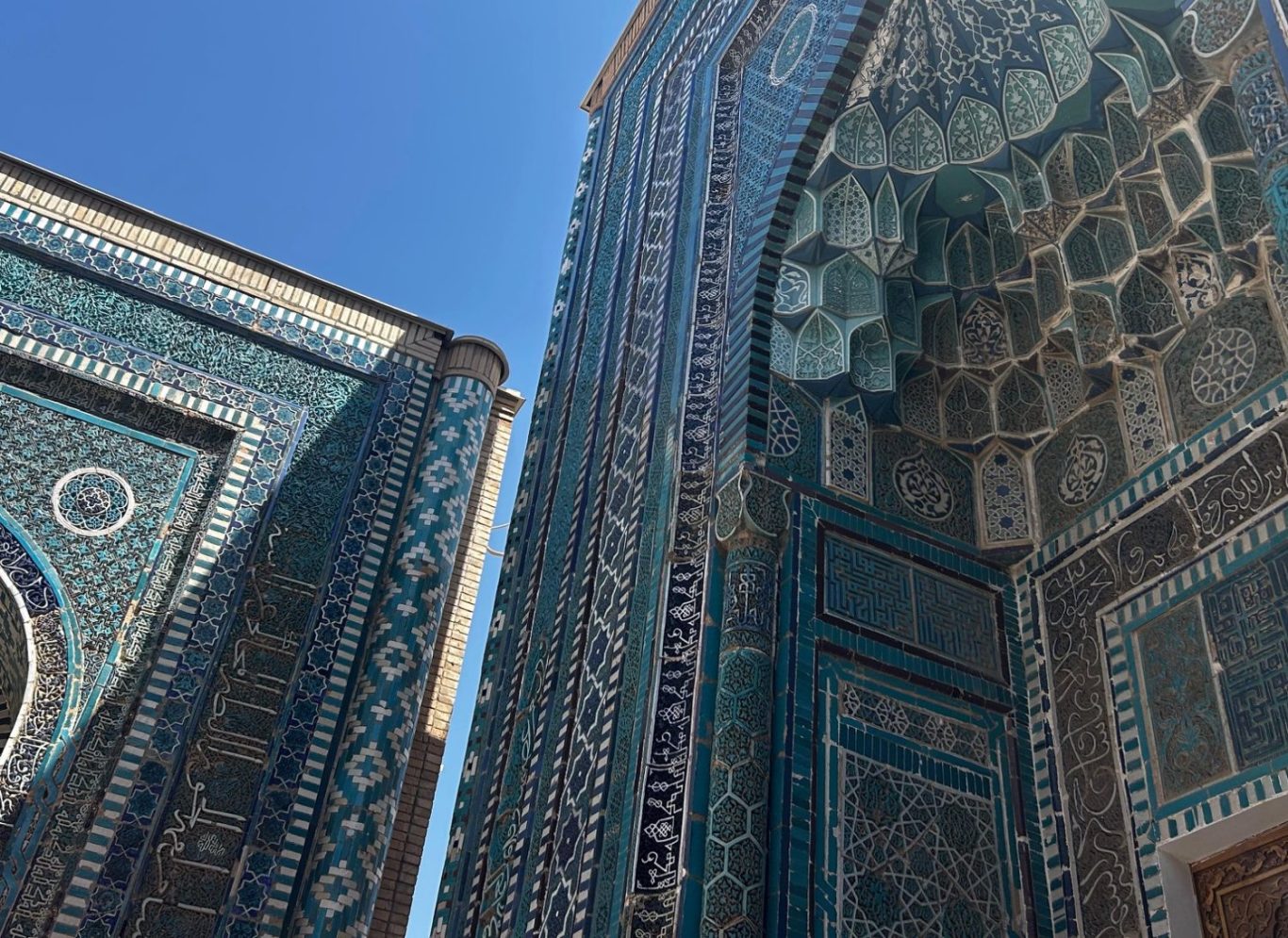
Samarkand. Credits : Andrea Aceto
Heirs or mirages? Dubai and Abu Dhabi in the face of Baghdad and Samarkand.
Crossroads of flows: from caravans to air hubs
Baghdad had asserted itself as a knot of caravan and river routes, Samarkand as a vital relay on the Silk Road. Their prosperity lay in their ability to organize the circulation of goods and knowledge. Caravansaries—true logistical hotels—dotted these routes, secured by guards or imperial treaties.
Today, Dubai and Abu Dhabi play an analogous role, but with radically different tools. Dubai International Airport (DXB) welcomed more than 92 million passengers in 2024, making it the world’s busiest air hub. Its Jebel Ali Port is the largest in the Middle East and one of the world’s top ten in container traffic. Abu Dhabi, meanwhile, has invested in the ADGM (Abu Dhabi Global Market), a financial free zone turned regional investment center.
Where Baghdad depended on the Tigris floods and Samarkand on the camels of the steppe, the Gulf metropolises command the flows through titanic infrastructure and national carriers such as Emirates and Etihad. In both cases, the idea is the same: to transform a “peripheral” location into an indispensable center of global trade.
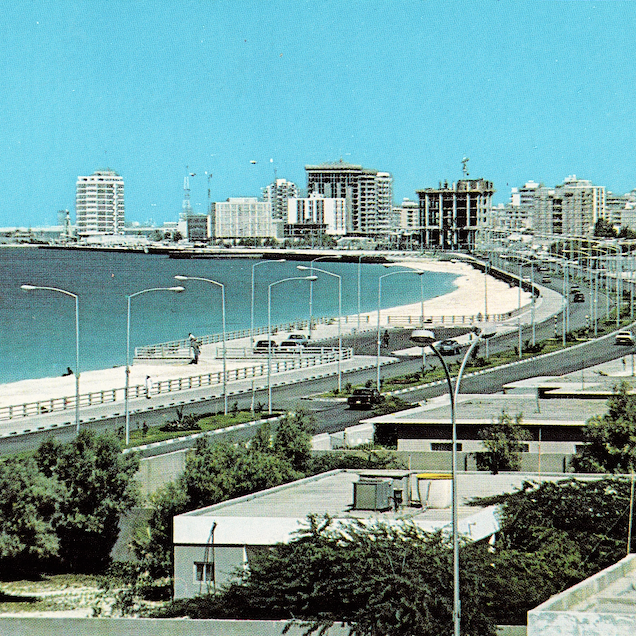
Abu Dhabi Corniche. Credits : Lest We Forget Archive, Postcard Courtesy Dr. Mohammed Al Mansoori
Capitals of power : from imperial splendor to sovereign capital
Abbasid Baghdad projected caliphal power through urbanism: the “round city,” palaces and mosques vying for grandeur. Samarkand, under Timur, became a marble-and-mosaic theater intended to show that the steppe conqueror was not only a warrior but also a patron. Monuments served as visual propaganda, affirming the political and cultural centrality of the city.
Dubai and Abu Dhabi operate under a similar logic, though with different materials. Here, skyscrapers, artificial islands, and signature museums (the Louvre Abu Dhabi, the future Guggenheim) embody the power of the Emirates. Gulf states use oil and financial revenues as caliphs once mobilized taxes and spoils. In both cases, urbanism mirrors political ambition.
As Baghdad and Samarkand were showcases of empire, Dubai and Abu Dhabi are showcases of rentier welfare states, striving to position themselves as indispensable in the global economy. Yet a nuance remains: dependence on hydrocarbons is a vulnerability, while medieval capitals relied on diversified commerce.
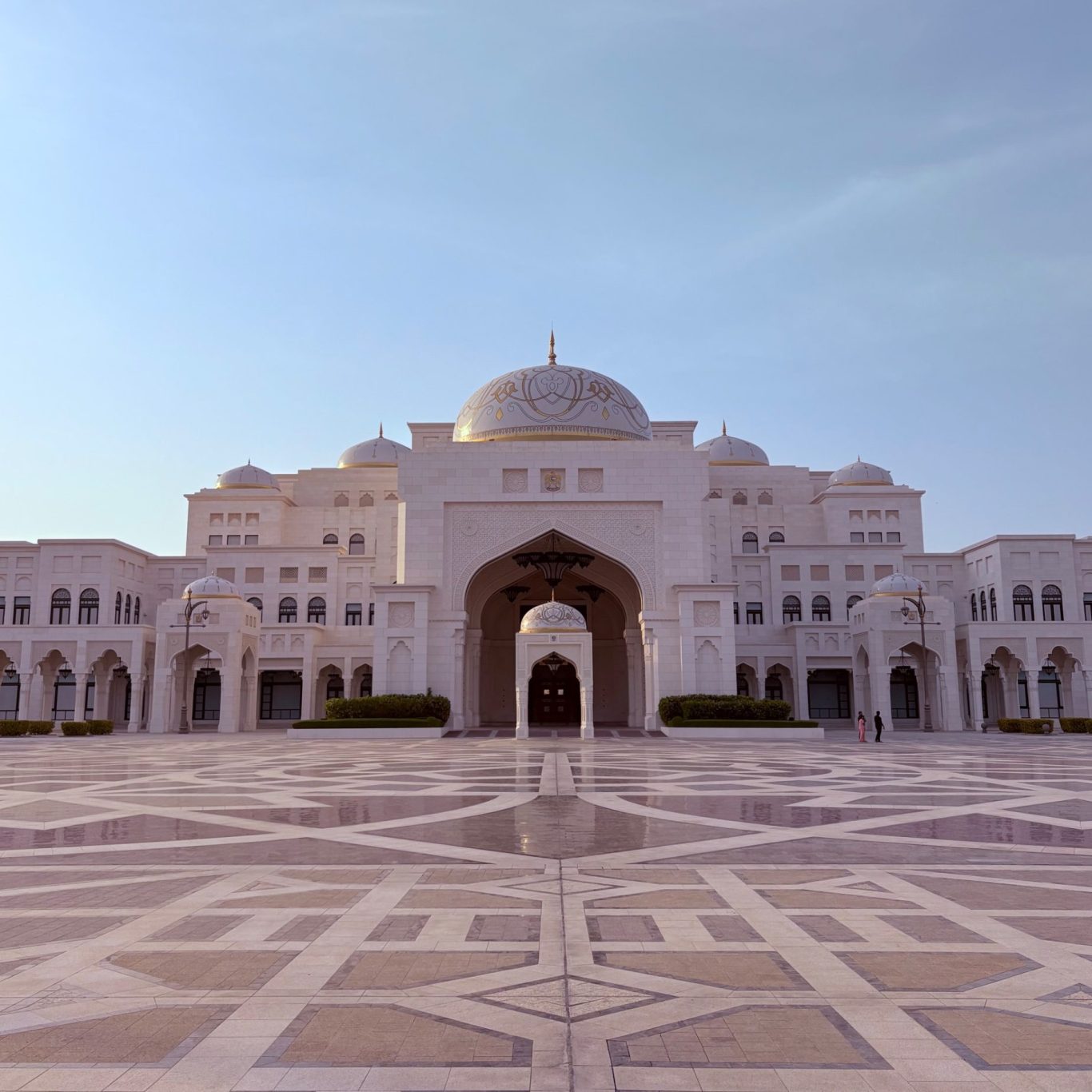
Qasr al Watan, Abu Dhabi. Credits : Victor Jardin
Cosmopolis : diversity as engine and challenge
In Baghdad, Arabs, Persians, Christians, Jews, Indians, and Chinese coexisted, allowing intellectual and artisanal flourishing. Samarkand, too, mingled Sogdian merchants, Buddhist missionaries, Persian artists, and Turkic scholars. Diversity was not a luxury but the fuel of economy and knowledge.
Dubai and Abu Dhabi are mosaics as well. Nearly 90% of their populations are foreign-born, arriving from the Indian subcontinent, Southeast Asia, Europe, or Africa. Cosmopolitanism is lived daily: in Bur Dubai’s Indian restaurants, Deira’s Iranian quarters, or the towers housing multinational headquarters. The Emirates manage coexistence pragmatically, but with stark hierarchies: citizenship is reserved for a minority, and migrant workers—the invisible engine of prosperity—remain in precarious conditions.
The difference lies here: Baghdad and Samarkand integrated their foreign communities into urban and intellectual life, while Gulf metropolises practice a “contractual” cosmopolitanism, dependent on strict migration policies. Diversity lived versus diversity controlled.
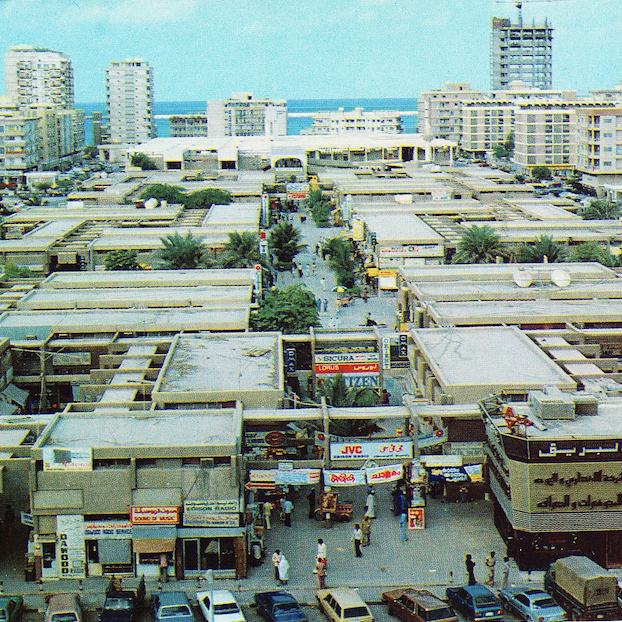
Market in Abu Dhabi. Credits: Lest We Forget Archive, Postcard Courtesy Dr. Mohammed Al Mansoori
The living memory of the Emirates: sustaining tradition in hypermodernity
Behind futuristic skyscrapers and bustling air hubs, the Emirates have not forgotten the richness of their traditions. Long before unification in 1971, community life (tribes, clans, families)—whether in oases, mountains, deserts, or along the coasts—depended on fragile balances and mutual exchanges: the sea provided dried fish, the desert its camels, the mountains their fruits and medicinal plants. These practices, passed down through the Quran, oral traditions, and healing know-how, embodied a logic of sustainability ahead of its time: respecting natural cycles and rejecting overconsumption.
Today, this memory is actively preserved through various initiatives and cultural events that shape Emirati life. The Abu Dhabi International Hunting and Equestrian Exhibition (ADIHEX) and the Al-Hosn Festival, both held annually, bring together a large majority of Emiratis in a country where they are, paradoxically, a minority. These events provide an opportunity to transmit the heritage and traditions of Emirati and Bedouin culture to younger generations born in a nation undergoing profound transformation.
Through this effort, the Emirates weave their spectacular modernity together with an identity rooted in the resilience of past generations—hospitality, tolerance, humility. Just as Baghdad and Samarkand once stood as universal centers of knowledge, Abu Dhabi and Dubai now seek to combine innovation with living memory, aspiring in their own way to become global cities once again—producers of culture and collective narrative.
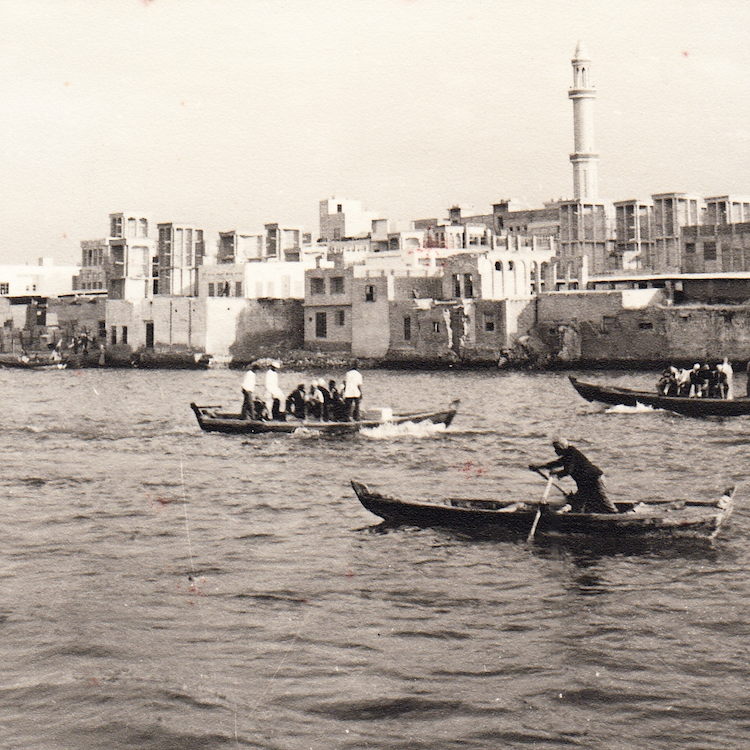
Al-Fahidi neighborhood (Old Dubai, souk), Dubai. Credits : Lest We Forget Archive, Postcard Courtesy Dr. Mohammed Al Mansoori
Heritage or rupture ?
If we focus on their functions—capturing flows, transforming wealth into urbanism, attracting and managing diversity—Dubai and Abu Dhabi do appear as heirs to Baghdad and Samarkand. But the modalities differ: where commerce’s gold and manuscript paper once powered the world, today it is oil, finance, and air transport.
The truest continuity, perhaps, lies elsewhere: in the Middle East’s capacity to reinvent centralities. From Baghdad to Dubai, via Samarkand, the region proves it can turn what seems peripheral into a vital center of the world. But where Baghdad and Samarkand were also crucibles of universal knowledge, the question remains: will the Gulf cities become more than hubs, and once again places of intellectual and cultural production with universal reach?