Is the Arabic language in danger ? (1/2)
18/12/2025
fusḥa, the standardised language common to the 22 states of the Arab League, is a unique linguistic case in the world. It is an ‘official’ language, as opposed to ‘spoken’ languages, or dialects. Indeed, fusḥa is mainly used in politics, the media and literature. At the same time, each country has its own distinct dialect, which is what the Arab peoples speak.
However, in the context of International Arabic Language Day, it is important to consider the potential decline of fusḥa which, although often opposed to dialects, could lose ground to foreign languages such as English, French, German, etc. Indeed, it is no longer rare to encounter Arabic speakers who abandon their own language in favour of a foreign language for professional or social status reasons.
In these two mirror interviews, we will ask Qoutaiba Mardam Bek and Tarek Abouelgamal, both Arabic teachers in France, about the reality of this decline for fusḥa, the reasons behind it and possible solutions.
“Dialect is not a threat to Arabic, it is its living soul”.
Interview with Qoutaiba Mardam Bek.
For Qoutaiba Mardam Bek, teaching Arabic is not simply a profession, it’s a legacy. A descendant of poets, he has spent his life navigating between the classical beauty of fusḥa and the vitality of dialects. In this conversation, he reflects on his personal journey, the challenges of teaching Arabic today, and the evolving relationship between language, identity, and society.
World arabic language day logo. Credits: Mustafa Wahhudi.
Al Mawja : Where did your desire to teach Arabic come from?
My passion for Arabic comes from my family. My father and grandfather were both poets, and they wanted me to excel in the language. From a very young age, I was immersed in Arabic literature. I read all the great authors of the Nahda and developed a strong command of fusḥa, the classical form of Arabic. I remember helping my classmates with their Arabic lessons, and later, during university, I began teaching my friends as well. That naturally led me to become a private tutor.
At first, I completely rejected dialects. My father was very strict about fusḥa, and I saw dialects almost as a form of corruption of the language. But everything changed when I started teaching Arabic to foreigners at language institutes in Damascus, and later in a school for diplomats. I quickly realized that, for my students, mastering the dialect was essential for daily communication.
In the 1990s, I had an Australian friend who studied Arabic in Egypt and wanted to write a book on the Syrian dialect. That’s when I began to see its richness and beauty. Dialects, I discovered, are like mirrors of our history: they reflect Ottoman, French, and many other influences. They’re also deeply political: they evolve with society and carry its transformations within them.
Between Classical, Modern, and Quranic Arabic, how would you define fusḥa?
The word fusḥa itself means “the clear” and “the correct.” It’s the form of Arabic closest to the language of the Qur’an and the first Islamic era, deeply tied to the vocabulary of the Qur’an and the Hadith. But fusḥa doesn’t always cover the more modern areas of knowledge or culture, such as media or technology. That’s why “Modern Standard Arabic” emerged to bridge that gap while keeping the clarity of fusḥa.
People often speak of a “decline” of fusḥa in Arab societies. Do you share this view?
Unfortunately, there’s some truth to that. Even before Islam, Arabic existed in multiple dialects, and poets of the mu‘allaqāt already reflected this diversity.
But today, the situation is different: the younger generation reads much less than we did. When I was in school, we studied poetry, novels, and texts entirely in fusḥa. Now, many young Arabs struggle to express their feelings or ideas in Arabic without relying on other languages. The result is a loss of vocabulary and a weakened connection with the language.
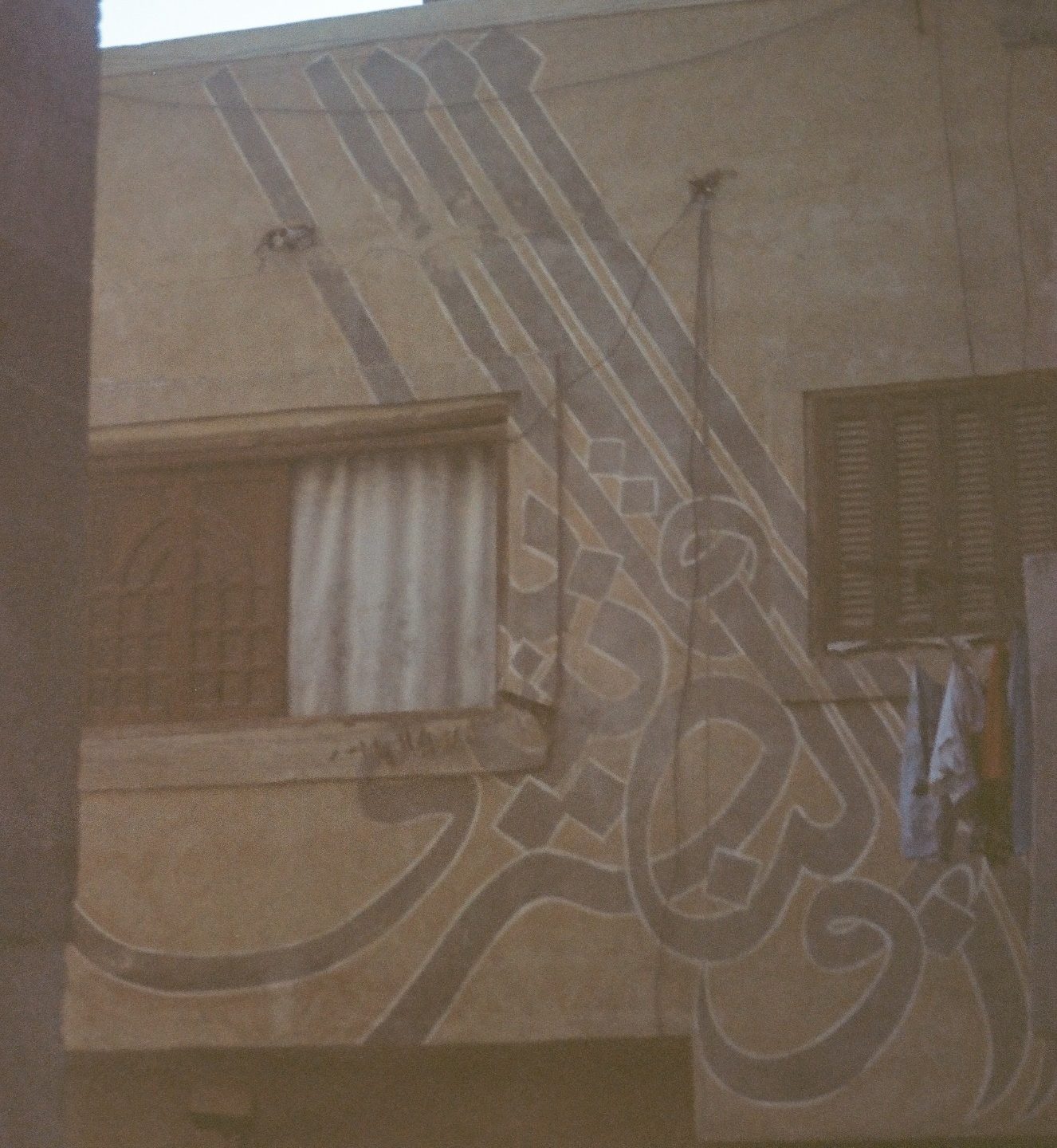
Arabic calligraphy, Al Qarafa. Credits: Martin Amrouche.
Fusḥa coexists with dialects in all Arab countries: has the relationship between the two evolved? What influence do dialects have on the learning/shaping of fusḥa?
They actually support one another. We can see this clearly after the Arab Spring: many new expressions born in dialects have enriched fusḥa.
For example, the Syrian term taafish (from the Egyptian ‘aafish, meaning “furniture”) came to describe the looting of homes by militias, and the word spread widely. More recently, the term takwi‘ appeared, meaning “to change direction suddenly” or “to make a U-turn,” and it follows Arabic grammatical patterns. This is a good example of dialect feeding back into the structure of fusḥa. It’s a living exchange.
Do dialects represent a threat to fusḥa, or on the contrary, a form of richness?
Absolutely. Dialects are made for communication : they evolve with time and society. When I was young, certain expressions in dialect didn’t exist yet, but language changes naturally. We should see this as a sign of vitality, not decay.
Has the schooling of privileged children in foreign institutions (American, French, British, German) replaced knowledge of fusḥa as a socio-economic marker?
Yes, in many ways. The job market now demands foreign languages, and that shapes education: the best schools will teach foreign languages to their students, de facto widening a socio-economic difference between the upper and the lower classes.
But attitudes differ from one country to another. In Syria, for instance, using English or French words in conversation can be seen as pretentious. In Lebanon, it’s the opposite: many young people lack Arabic vocabulary and switch naturally to foreign languages. The kids who grow up in these schools live in a bubble around the upper classes, creating linguistic divides within society.
To what extent might this contribute to widening the gap between upper classes and the rest of the population, and/or to the erosion of a (pan-)Arab identity?
It can, yes. In Lebanon, for example, foreign languages have long opened doors to international opportunities. A century ago, people there already knew they needed languages beyond Arabic to succeed abroad. Many Lebanese succeeded in their careers and the Lebanese diaspora is known for its achievements. However, Lebanon struggled for years in defining itself as an Arab country. Generalizing the teaching of fusḥa may have helped Lebanon in finding its identity. And this is still an issue today: sometimes some of my foreign students are approached by passersby who are intrigued by young people taking Arabic classes, a language that some people consider useless compared to English, French, or German.
But in Syria, under the Ba‘athist emphasis on Arab unity, Arabic was central to identity. So the relationship with the language is deeply tied to political and historical context.
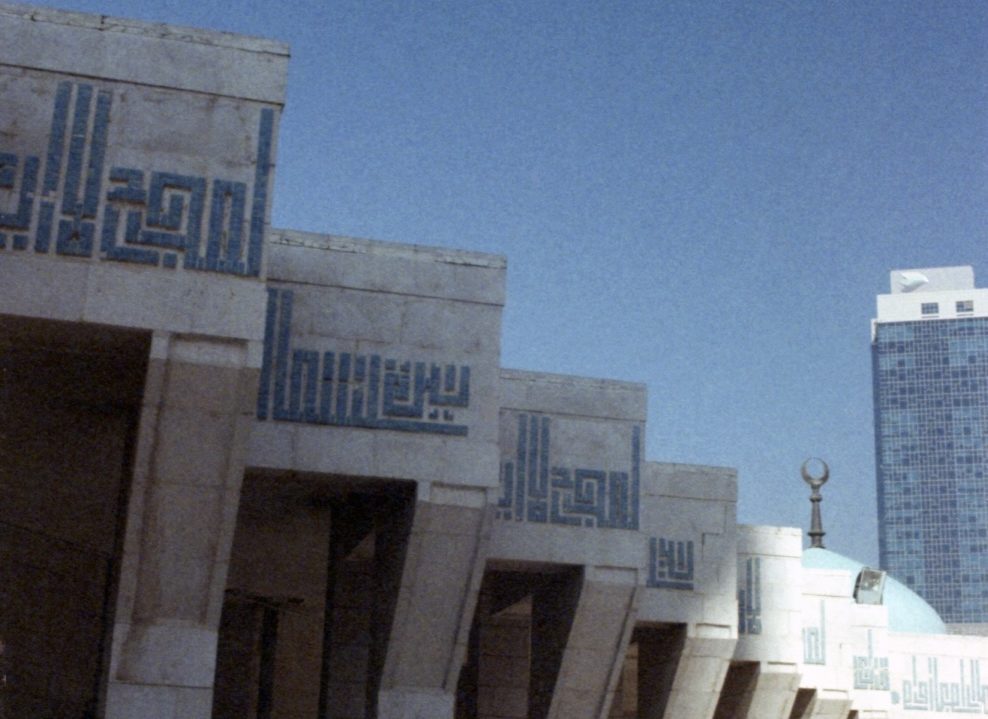
Arabic calligraphy, King Abdullah I mosque, Amman. Credits: Martin Amrouche.
Paradoxically, we are witnessing in many countries a renewed interest in learning Arabic, which is increasingly valued in the professional world. How do you explain this trend?
There is some truth in that. For decades, many Arabs have associated progress with the West, including its languages. Yet today, paradoxically, we’re seeing a renewed global interest in Arabic, especially in the professional world. The Arab region has become an economic and cultural hub; to succeed here, you need to understand the language and the culture behind it.
Yet, learning fusḥa remains difficult for many Arab students because the teaching methods are outdated. Since I was a student, we’ve been using the same approach, focusing heavily on i‘rāb (vocalization and grammatical analysis). It’s exhausting for students and discourages them from enjoying the language. We rarely connect Arabic lessons with modern topics that interest young people.
In contrast, English and French teaching materials use progressive levels, assessments, and communicative methods. Arabic teaching hasn’t caught up. This makes the language feel distant, even for native speakers.
What are today the main challenges in rekindling young generations’ desire to learn fusḥa?
The key is to change the method. Students must enjoy learning their language, not suffer through it. We should encourage reading, especially contemporary novels and young authors, and make learning interactive, through music, stories, or discussions about real life.
It’s also crucial to connect fusḥa with dialects: to show students where familiar expressions come from and how they link to the classical language. We still have many talented Arabic writers, especially in Syria, where literature has reflected the pain of war. But I hope a new generation will write about their dreams and everyday lives, not just tragedy.
Finally, I believe we should teach both fusḥa and linking dialects to it in schools. Together, they form the full picture of who we are.