The crisis of democracy: rethinking civic futures through the case of Lebanon. (2/4)
Victor Jardin - 17/11/2025
Across the world, democracy is under strain, and Lebanon offers a stark reflection of that crisis. Decades of corruption and paralysis have drained public trust, yet amid collapse, new civic movements and diaspora voices continue to push for change.
This series explores those efforts to reclaim the political space. The first interview, with activist Layal Beyhum, examined how Lebanon’s youth and diaspora are redefining civic engagement after the 2019 uprising, and it remains available for readers who wish to revisit it (click here).
Through the next conversations, the series continues to ask a question that goes far beyond Lebanon: when institutions fail, can citizens reinvent democracy from the ground up?
“Rebuilding the Lebanese Republic starts with reclaiming citizenship”.
Interview with Michel Helou
Secretary General of the National Bloc, Michel Helou embodies a new generation of reformist Lebanese leaders determined to challenge Lebanon’s sectarian system and promote a civic, accountable state. In this conversation, he discusses how to move beyond clientelism, the obstacles to reform, and why he believes Lebanon’s democratic renewal depends on rebuilding trust, memory, and citizenship.
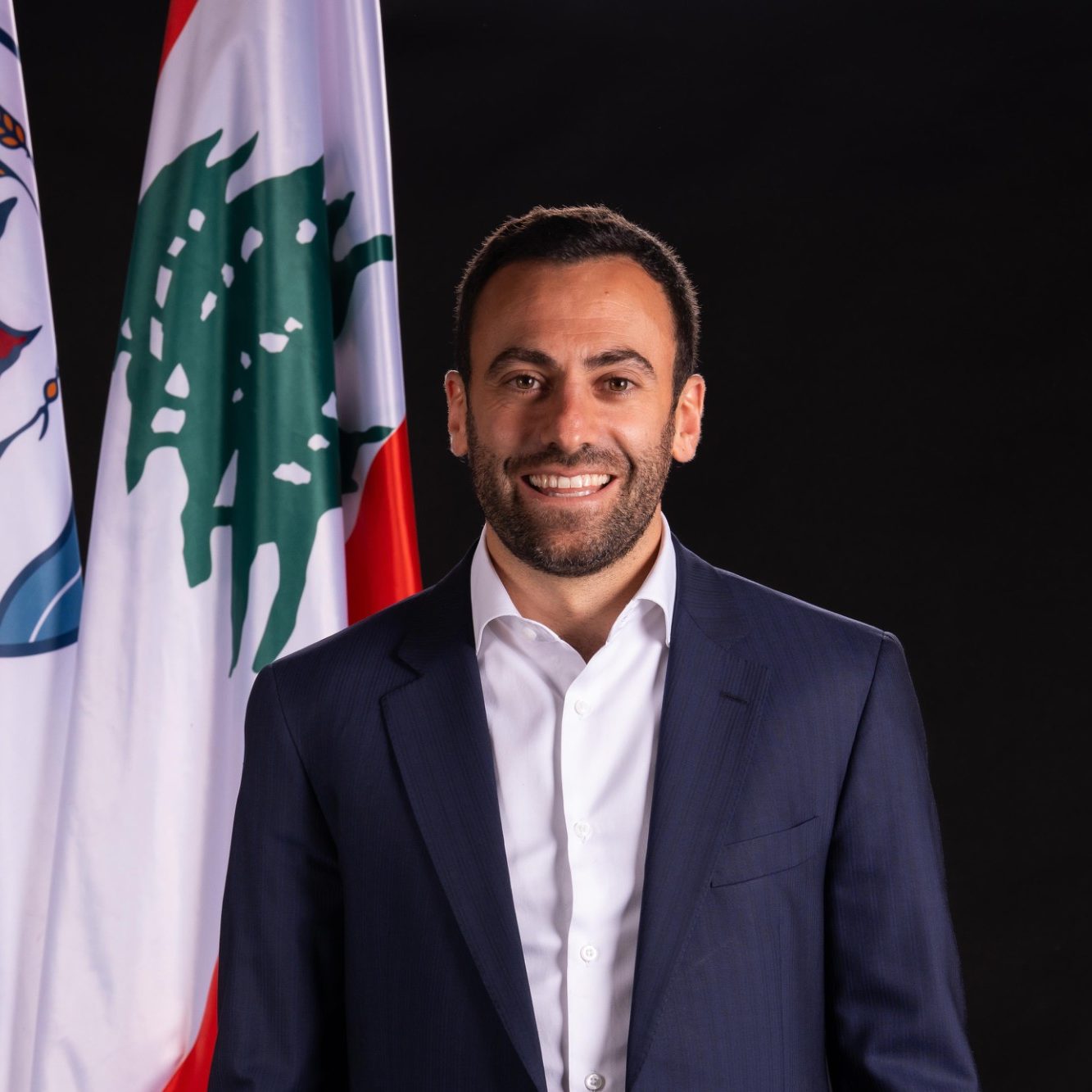
Michel Helou, president of the National Bloc. Credits: National Bloc.
AL Mawja: Al Mawja: Lebanon is often described as a democracy trapped in a sectarian mold. How do you see the roots of this crisis?
Michel Helou: The difficulty lies in transforming political practice. Most Lebanese parties have become echo chambers for foreign influence and sectarian identity. Their main function today is clientelism: they replace the state instead of strengthening it. Many are the direct heirs of wartime militias, drawing legitimacy from the civil war, and one in particular, Hezbollah, was born as an armed group before becoming a political party. This has left us with a system where politics serves identities and interests, not citizens.
Our task is to restore the idea that the State should serve everyone equally. That means ending the culture of impunity, dismantling the logic of patronage, and putting sovereignty back in the hands of citizens — not armed groups or foreign patrons.
Al Mawja: The NB is both one of Lebanon’s oldest and newest parties. How do you define its identity today?
Michel Helou: The National Bloc has a unique trajectory. Founded in the 1920s, it played a central role in Lebanese politics through leaders like Émile and Raymond Eddé.
Émile Eddé, one of the architects of the Lebanese Republic, was known for defending the country’s independence and secular identity during the French Mandate. His son, Raymond Eddé, inherited both the leadership of the Bloc and a reputation for integrity and national coherence. Nicknamed “the Conscience of Lebanon,” he was one of the few Christian leaders to consistently oppose sectarian militias and foreign interference. During the civil war, Raymond Eddé refused to take up arms, a principled stance that exposed him to death threats and ultimately forced the Bloc to withdraw from political life.
We relaunched in 2018 as a non-sectarian, democratic, and fully Lebanese-funded party: no foreign support, no weapons. Our goal is to build a citizen-based movement that transcends confessional divisions. The Thawra gave this project new momentum and showed that such a path is possible.
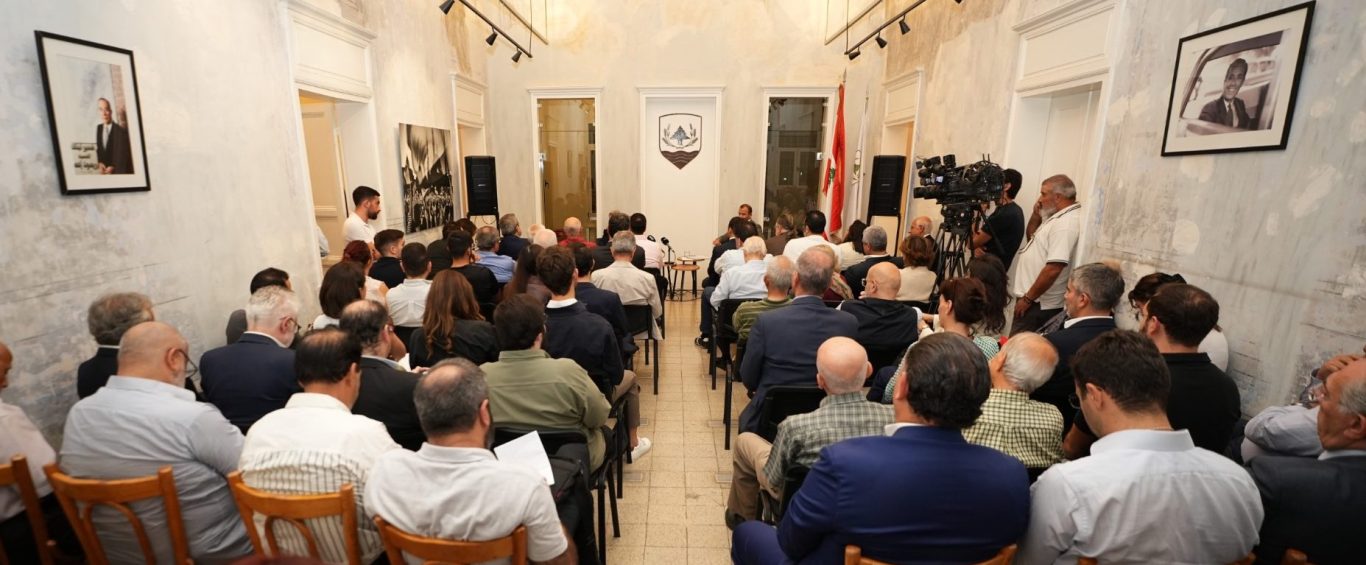
The National Bloc’s headquarter in Gemmayze, Beirut. Credits: National Bloc.
Al Mawja: What would it take for Lebanon to transition from sectarian identity to citizenship?
Michel Helou: It begins with ending our “civil war mentality”. We must disarm, all of us, and put an end to the mentality of militias. Lebanon has to free itself from the regional “war of axes”, from the instrumentalization by foreign powers. Only then can we imagine true citizenship, built on peace both internal and external.
This is why the question of Hezbollah’s weapons cannot be postponed indefinitely. Neither the government nor the army is doing the job, partly due to lack of resources, but also due to fear and political paralysis. The longer we delay, the higher the price we will pay. We saw it in 1990, when the civil war formally ended but militias were never fully disarmed, allowing a culture of armed politics to persist under Syrian tutelage. We saw it again in 2000, when Israel’s withdrawal from South Lebanon was celebrated as a victory but left Hezbollah entrenched as a parallel military force. Then came 2006, when the war with Israel devastated the country, causing over a thousand civilian deaths and billions in destruction for a “divine victory” that changed little on the ground. The Syrian conflict, beginning in 2011, dragged Lebanon even deeper into regional rivalries, as Hezbollah intervened militarily across the border and inflamed sectarian divisions at home. And now, in 2023, once again, Lebanon finds itself exposed to the ripple effects of regional escalation, with border tensions and economic collapse compounding a sense of national exhaustion. Each time, Lebanon paid the price (particularly the Shiite community) without any tangible gain for the Palestinian cause.
The State must no longer tolerate a State above the State. Reclaiming sovereignty is the first step toward building citizenship.
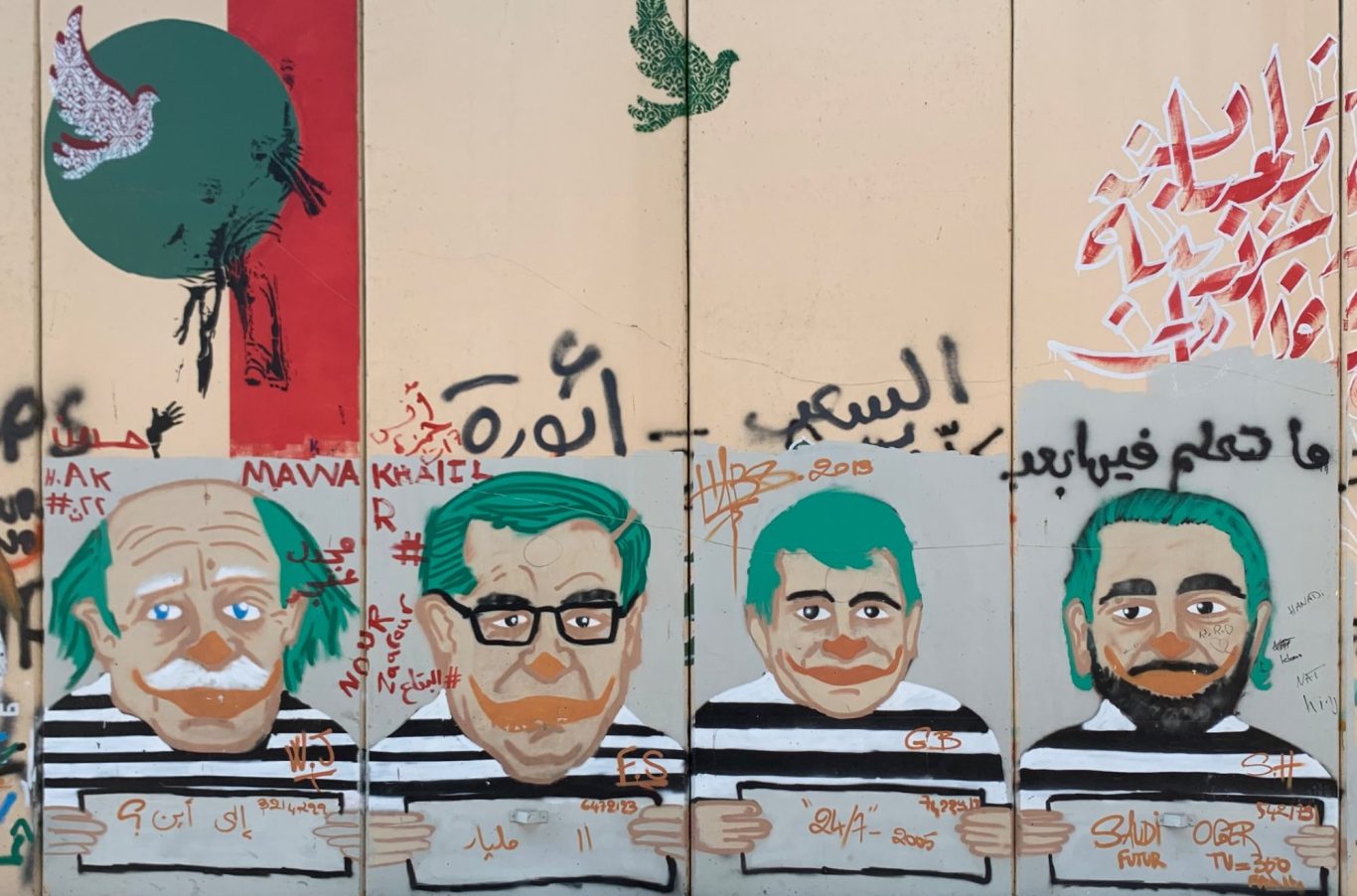
Tag denouncing the “mafia” governing Lebanon (W. Jumblatt, M. Aoun, G. Bassil, S. Hariri), Downtown Beirut. Credits : Victor Jardin.
Al Mawja: You often emphasize the link between citizenship and socio-economic reform. What are the priorities?
Michel Helou: Without deep financial and economic reform, Lebanon won’t recover. We need to restructure the banking system, as the IMF plan suggests, by fairly distributing the losses of the financial crisis and auditing responsibilities. Today, collusion between bankers and politicians blocks any accountability.
We also need a monetary reform to restore the role of the Lebanese pound, a restructuring of public debt, and above all, a financial administration capable of functioning again. For example, Électricité du Liban alone has cost us 45 billion dollars in losses over thirty years. These structural reforms are essential to regain fiscal room to maneuver and rebuild trust.
Justice reform is equally crucial. Accountability must become the rule, not the exception. Only then can citizens feel that the law protects them equally, that politics is no longer a private business. Economic recovery, social justice, and accountability go hand in hand. They are what will allow Lebanese people to free themselves from the feudal-religious and clientelist system that keeps them dependent.
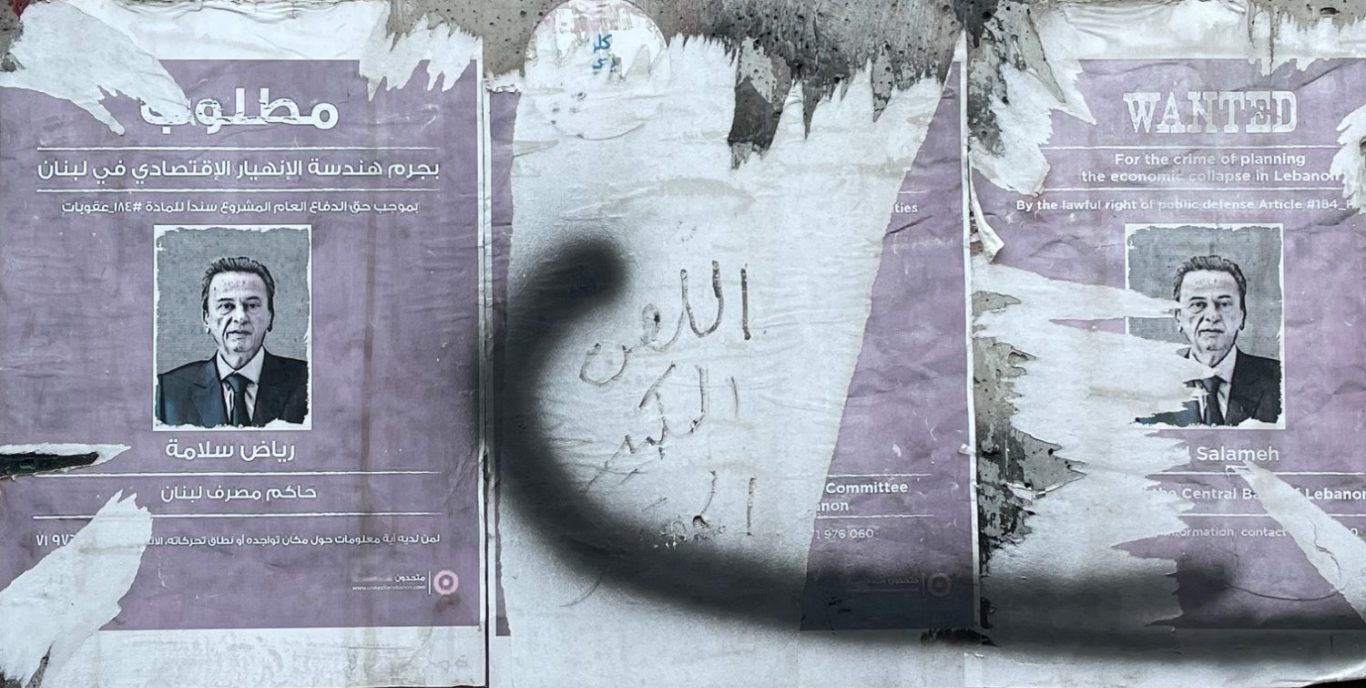
Posters denouncing Riyad Salamé, former governor of Banque du Liban, Hamra, Beirut. Credits : Victor Jardin
Al Mawja: Beyond institutions, what does it mean to rebuild citizenship in practice?
Michel Helou: Citizenship is not only about laws, it’s about belonging. We need to restore a sense of common destiny. That requires a shared historical narrative and a culture of memory about the civil war. Education must play a central role: as long as we raise generations without confronting our past, we will reproduce its divisions.
This is why the National Bloc also works on projects related to reconciliation, civic education, and the rewriting of our collective story. Our vision combines economic and political reform with cultural and social repair.
Al Mawja: The 2019 Thawra awakened a generation but also left behind fragmentation. What lessons have been learned?
Michel Helou: The Thawra proved something fundamental: it is possible to do politics outside the traditional parties. The movement gave birth to the “change MPs” elected in 2022 — a breakthrough moment that showed the vitality of a new civic consciousness.
But in many ways, we are also reaching the end of a cycle that began in 2015, with the popular protests against Beirut’s waste crisis and the emergence of Beirut Madinati as a political experiment. Over the past decade, this “movement of change” has gone through stages of awakening, mobilization, and now faces the challenge of structuring itself. The next step must be one of maturation — turning protest into a coherent political project, built on shared mechanisms, unity, and strategic depth.
We reformists learned that enthusiasm is not enough; organization matters. During the 2022 elections, we paid the price of fragmentation. Reformist forces must now coordinate, pool resources, and articulate a clear and serious program. The National Blocis in dialogue with these movements, working to offer precisely that — a credible political alternative anchored in civic values, programmatic depth, and institutional reform.
Al Mawja: Can Lebanon’s democracy survive without a constitutional overhaul of the sectarian system?
Michel Helou: Before changing the Constitution, we should start by applying it. The Taif Agreement already provides for crucial reforms: the disarmament of militias, judicial independence, accountability, decentralization. None of this has been implemented.
What we live under today is not Taif, but the Doha Agreement of 2008, which gave Hezbollah and its allies veto power over government decisions. We must clarify responsibilities, end the culture of “consensus” that paralyzes institutions, and gradually deconfessionalize the state, starting from the administration, then the government, and finally Parliament.
But we should be cautious: simply abolishing quotas overnight could inflame sectarian tensions. Deconfessionalization must be accompanied by a shared national narrative and civic education.
Al Mawja: After so many disappointments, how can trust between citizens and institutions be rebuilt?
Michel Helou: It’s a long process. People remain mobilized, but frustration grows because change is slow. We need tangible results, reforms that restore dignity and faith in politics.
The diaspora has a major role to play here. In the last elections, nearly half of diaspora votes went to reformist or sovereignist movements. We must protect that progress. But parliamentary rules still favor Speaker Nabih Berri and block reformist initiatives, we must not give up that battle.
Al Mawja: Many young Lebanese have lost faith in politics. What message would you send to them?
Michel Helou: Hope is the most political act there is. I understand the fatigue, especially when the South is once again under fire, when families are displaced, when the country feels like a chessboard for others. But if we don’t act, nothing will change.
As Jean-Yves Le Drian - French envoy for Lebanon and former minister of Foreign affairs - said, “Help us help you.” He was right. Lebanon will only rise if its citizens take responsibility for it, through participation, solidarity, and patience. Our generation’s duty is clear: to reclaim citizenship and rebuild the Republic, step by step.