The Egyptian state's relationship to spontaneous urbanization (1/2) : spontaneous urbanization as a constituvie phenomenon of Cairo
Al Mawja contributor - 24/11/2025
"Formality and informality are fluid concepts that say more about the authority to legitimate certain practices than describe the condition of that particular practice." (Allen, 2016) [1].
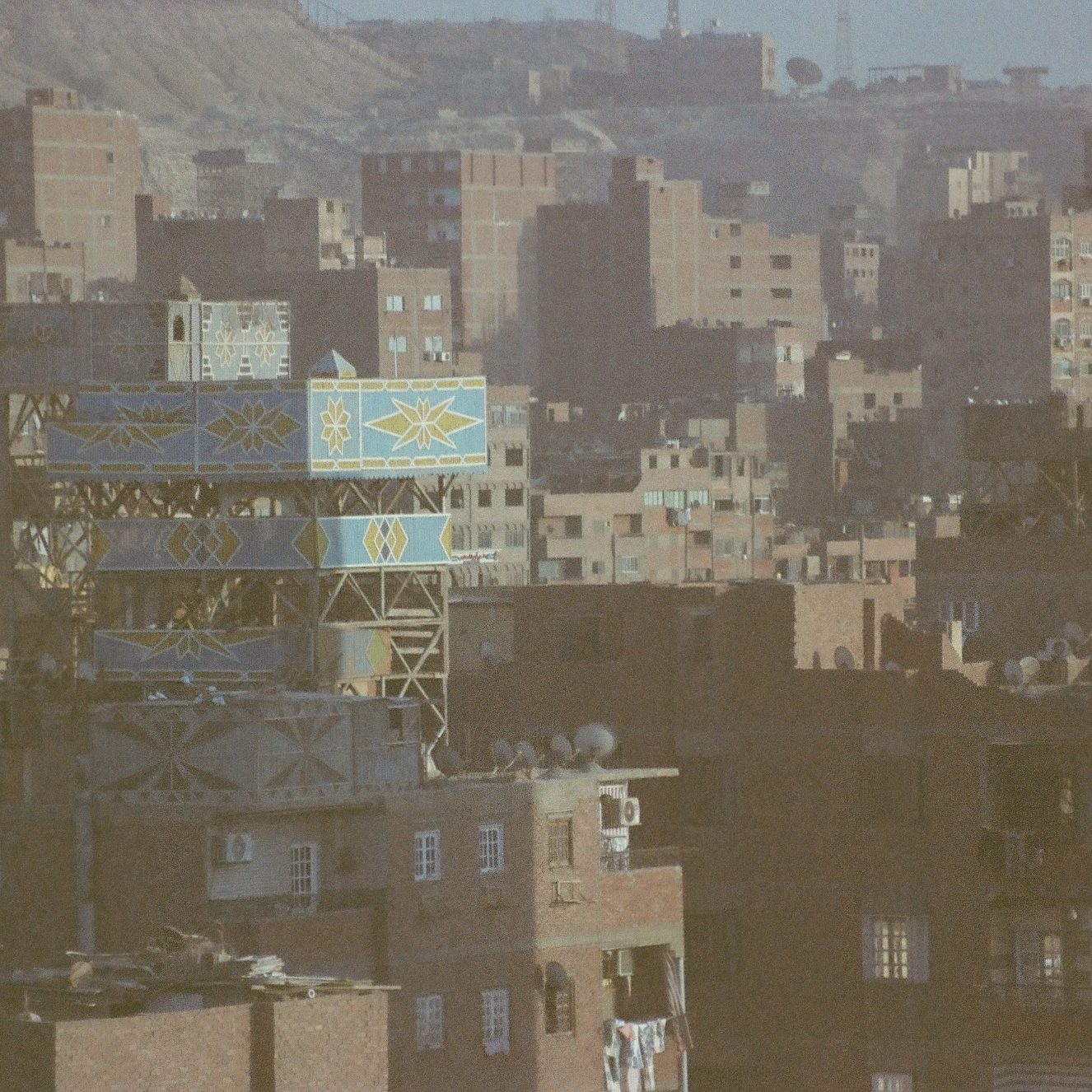
ʿashwāʾiyyāt in the al-Qarafa neighbourood. Credits : Martin Amrouche
Political authority asserts its domination by controlling the material context of space, but also by shaping the ways in which that space is represented, and how affects, emotions, and imaginaries invest it. The urban refers to a particular mode of spatial production, characterized by its position of centrality: it concentrates processes of production, consumption, exchange, and management [2]. Control and ownership of urban territory therefore constitute a major political stake. The Egyptian urban landscape is in constant transformation, as shown by the emblematic projects associated with each political leadership— from Khedive Isma‘il’s “Paris on the Nile” to President al-Sisi’s New Administrative Capital, launched in March 2015. Yet the urban frenzy of the marshal’s era, who came to power following the July 2013 coup, has reached unprecedented levels. The increase in the production of formal housing units, the growing share of the national budget allocated to the built environment [3], or the expanding magnitude of the cement extraction sector [4] are tangible indicators of this trend, while the symbolic importance of urban development is reflected in the appointment of two prime ministers directly tied to this sector [5].
The urban dimension of the Sisi era is marked by the foregrounding of large-scale infrastructure megaprojects, alongside a strategy to shape Cairo’s image as an attractive hub capable of competing in the global arena. Through the disproportionate scale of the resources invested—combined with a political campaign of patriotic exaltation—these transformations participate in a fetishization of space: the complete reshaping of the physical environment and the proliferation of “out-of-the-desert” projects assign urban development a strong symbolic and emotional value, masking the social relations that underpin it.
A major component of this modernizing voluntarism targets the ʿashwāʾiyyāt [6] — framed as the pathological and illegal by-product of Cairo’s urbanization, and whose eradication is promised by 2030 [7]. Although the term has no legal definition, it is widely used in political, media, and everyday discourse to designate dwellings built without permits on subdivided private agricultural land outside regulatory frameworks, or on state-owned land. These areas today house around 65% of Greater Cairo’s population [8], roughly 13 million people. Far from representing zones of marginality, this mode of spontaneous housing production has become a key avenue for accessing shelter, for both precarious populations and middle strata alike [9]. It is the result of adaptation and survival strategies in a context of insufficient public land reserves and an inaccessible private real-estate market, and remains indispensable for meeting housing needs in the current configuration. In 2023, more than 80% of newly produced housing units fell under informal construction [10].
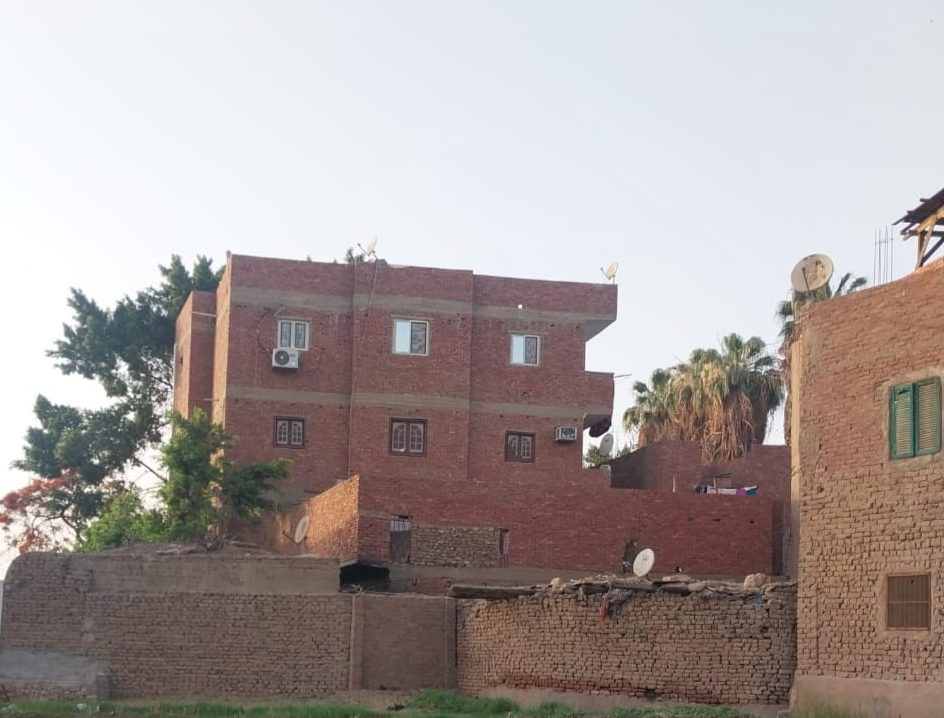
Non-compliant building, Cairo. Credits : Al Mawja contributor
he regime’s policies toward this phenomenon combine multiple approaches: urban-rehabilitation programs to improve infrastructure; demolition of areas defined as “unsafe” [11] and relocation of residents either on-site or in new peripheral housing; legislative frameworks designed to facilitate the regularization of informal constructions [12] ; and containment practices [13] vaiming to confine spontaneous urbanization to delimited zones. These practices are diverse, yet their political effects can be understood by situating the history of this urban-production mode within the post-2013 transformations of the Egyptian state. The contradictions between a modernizing developmental rhetoric that makes access to formal housing an explicit objective, and an urban governance geared toward land commodification, investment-seeking, and the disciplining of urban centers of dissent, reflect a political order structured by a neoliberal form of authoritarianism [14].
The regime’s relationship to spontaneous urbanization reveals the constitutive practices of the Egyptian state, conceptualized here as a structural effect [15]. The state is not understood as a predefined entity characterized by a formal, monolithic, coherent structure, but as a set of relations and practices whose very nature is contested and whose power is unevenly distributed. These practices aim to produce the effect of a structure external to society and encompassing it—creating a sharp state–society distinction, notably through meticulous spatial organization. In the context of urban governance, routine socio-spatial regulatory practices—urban-planning schemes, zoning laws, land-use regulations, allocation of basic services, administrative divisions and boundaries, and all mechanisms determining what inhabitants may or may not do in a given space—constitute these state effects. They are continually produced and reproduced through millions of mundane activities.
Within this framework, informality is not understood as external to the state, but rather as partially generated by state practices. The label “ʿashwāʾī” applied to informal neighborhoods thus appears as a discursive practice of legitimation and delegitimation [16]. By reinforcing a binary distinction between formality and informality, the political regime mobilizes the concept to reaffirm itself as the vanguard of a modernizing state—constructed in opposition to an informal order—thereby legitimizing the expansion of its material and symbolic presence within space.
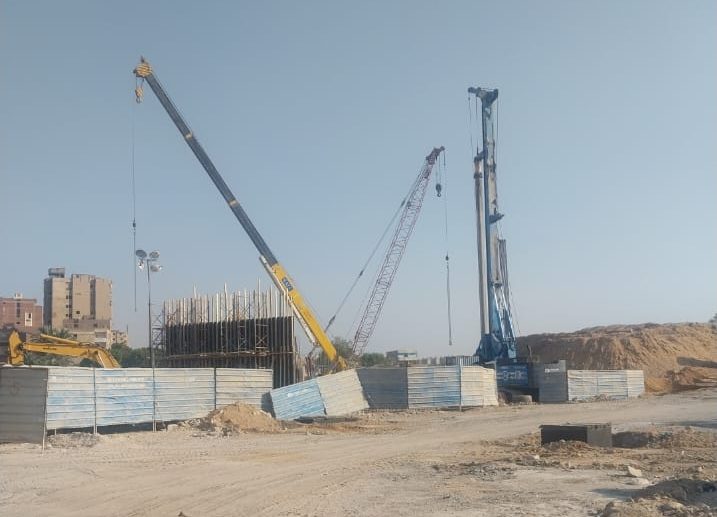
Work is underway on the construction of the Salah Salem Road, resulting in numerous demolitions in al-Qarafa.. Credits : Al Mawja contributor
The Emergence of Self-Built Housing as a Response to a Structural Housing Crisis — and Its Evolution in Public Discourse
How did the ʿashwāʾiyyāt develop? A wave of migration reached Cairo in the 1950s, composed largely of young men drawn by economic development and massive industrialization under Nasser. After saving some money, they purchased buildable land in peripheral villages (Kit Kat, Imbaba, Mit Okba in Giza Governorate). Fueled by large-scale rural exodus, Greater Cairo’s demographic growth reached 4.4% in the 1950s [17]. This period saw the beginning of a major wave of self-built housing expansion, extending Cairo’s metropolitan footprint westward (Boulaq al-Dakrour, Waraq al-Hadr, Waraq al-Arab) and northward (Shubra al-Kheima, Matariya).
Most construction occurred on private agricultural land: landowners found it more profitable to sell their plots for construction than to rely on agricultural yields. The wars with Israel in 1967 and 1973 drastically reduced state spending on public housing, triggering an even larger wave of spontaneous urbanization—more than 84% of new units built in the 1970s were illegal. Construction was often financed by Egyptian migrant workers in the Gulf. Many residents also settled on state-owned desert land through a practice colloquially known as “putting one’s hand” (wadaʿ al-yid) on it.
Under Sadat and Mubarak, urban policies focused on building new towns in the surrounding desert, in a context of economic liberalization. The state lacked the means to implement its developmentalist rationale and, pushed by structural-adjustment packages imposed by neoliberal financial institutions (IMF, World Bank), increasingly capitalized on its land assets by selling them to private investors—fueling intense real-estate speculation. In response to austerity measures (privatizations, cuts to subsidies and public assistance, market deregulation), major protests emerged and were violently repressed [18].
It is in this context that international financial institutions, development agencies such as USAID, and public authorities began to identify self-built neighborhoods as potential urban centers of protest, reframing the housing crisis as a crisis of informality [19]. The state began to survey “informal” housing and was encouraged to move away from neglect toward the development of legal frameworks to formalize property titles and integrate residents. Yet housing units offered in the new towns were both financially inaccessible to precarious populations and too distant from Cairo’s labor market. Despite this, self-built housing—due to its low cost and residents’ direct involvement in construction—remained the preferred solution for vast segments of the population.
A major event reshaped the state’s approach to informal neighborhoods: after a 1992 earthquake, Islamist charitable associations provided emergency relief in the absence of adequate public assistance, and in a climate of political unrest, an independent Islamic caliphate was proclaimed in Imbaba [20]. After security forces intervened, popular neighborhoods became depicted as even more criminalized than before, reinforcing a binary between formal and informal areas—portrayed as reservoirs of insecurity and terrorism. This pathologizing, security-driven framing prevents consideration of the structural causes behind spontaneous urbanization and distances rehabilitation policies from a rights-based, “right to the city” model [21].
In 2008, a rockslide in Duweika killed over 100 people. Located beneath al-Moqqatam, this precarious area was prone to landslides, exemplifying the real dangers created by infrastructural vulnerabilities. Insufficient wastewater treatment often leads to flooding and septic-tank overflow, weakening soil—particularly in areas with limestone geology such as Duweika and Istabl Antar near the Ezzbet Khairallah plateau. In the wake of the disaster, a new entity attached to the Ministry of Housing embodied a developmentalist interest in precarious dwellings: the Informal Settlement Development Fund (ISDF) was created by decree [22], establishing a legal classification to identify different types of neighborhoods (planned areas, unplanned areas, unsafe areas with four degrees of risk) [23] to prioritize rehabilitation interventions.
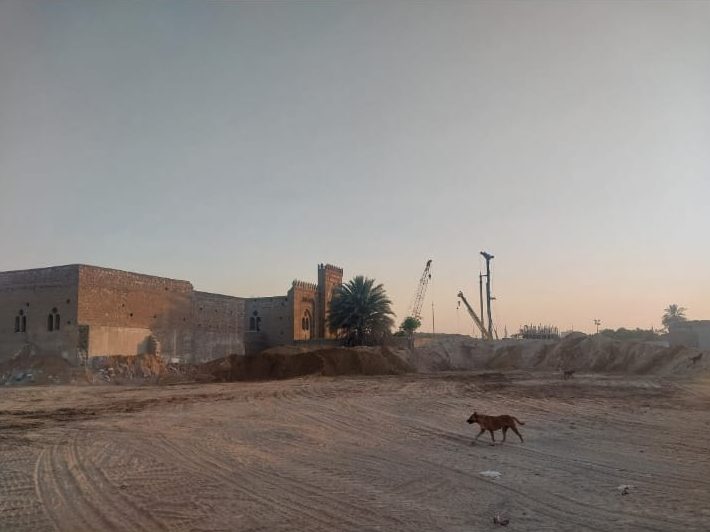
Destruction works in the al-Qarafa neighbourhood. Credits : Contributeur Al Mawja
After the 2011 revolution, a political vacuum created by unstable leadership transitions led to a resurgence of unpermitted construction, increasing to two or three times pre-revolution levels [24]. Though its intensity varied, spontaneous urbanization has grown continuously since the 1950s, becoming the most accessible housing mode for millions, shaped by chronic state neglect [25] This exposes the contradictions between the population’s real needs and a territorial policy oriented toward revenue extraction. With intermittent governance viewing the city primarily through a security lens rather than an urban-development one, authorities failed to meet the challenges of urban demographic explosion and deliberately ignored encroachments on agricultural and public land. The absence of sanctions stemmed from fear of provoking unrest amid the state’s inability to offer tangible housing alternatives. Thus, stigmatizing discourse on ʿashwāʾiyyāt does not reflect the state’s ambiguous relationship to informality: the complexity of land laws, the grey zone of informal areas, and the tacit permission granted in many zones to provide low-cost housing for the poor have created a contested, ambiguous status for many urban communities.
Since the past decade, the same logics remain: public authorities view land—Egypt’s most abundant resource—as a financial asset for attracting Foreign Direct Investment (FDI). Any democratization of local urban governance, which briefly emerged during the revolution [26]. has been suppressed by an increasingly centralized and authoritarian trend, whose coercive power derives from the absence of institutional channels for negotiation or mediation between the state apparatus and the population [27].
Yet despite these continuities, a rupture in the current regime’s urban governance can be identified—stemming both from the transformations of the post-revolution political order and from shifting constraints of the global neoliberal system within which Egypt is embedded. The elimination of informal neighborhoods is now presented as an explicit goal of the modernizing development project “Vision 2052”; demolitions have surged; showcase relocation projects have multiplied; the legislative framework around spontaneous urbanization reflects an intensified extractive logic; and the socio-economic structural conditions that generate this mode of housing production remain unaddressed.
Thus, examining the state’s relationship to spaces defined as informal reveals its reconfiguration in favor of a corporatist military elite, which—constrained by Egypt’s structural position within global capital circulation, and using an instrumental legislative framework and fragmented urban governance—consolidates its dominance over economic production and reinforces the materiality of the state through a developmentalist approach designed to legitimize political power.
[1] Allen, J. (2016). Topologies of power: Beyond territory and networks. Routledge.
[2] Castells, M. (1972). La question urbaine. FeniXX.
[3] Shawkat, Y. (2020). Egypt’s Housing Crisis: The Shaping of Urban Space. The American University in Cairo Press.
[4] Abosira, M., Alaeddine, T., Badir, R., Bonnefoi, F., Díaz-Bone, L., El Dorghamy, A., ... & Zaazaa, A. (2022). Middle eastern cities in a time of climate crisis. A. Deboulet, & W. Mansour (Eds.). Friedrich-Ebert-Stiftung Egypt.
[5] Ibrahim Mehleb (Prime Minister from 2014 to 2015) had been CEO of Arab Contractors, the largest national construction company, before becoming Minister of Housing. Moustafa Madbouly (2018 – still in office) previously headed the GOPP, the strategic planning agency of the Ministry of Housing, and in 2008 became responsible for the national Cairo 2050 project, aimed at gentrifying the capital.
[6] Meaning in Arabic “informal neighborhoods,” literally “random.” Commonly translated into English as slums.
[7] تحيا مصر. “ممثل الأغلبية يشارك في احتفالية كتاب الجمهورية..بعنوان «السيسى صانع الأمل.. مصر تودع العشوائيات».” June 11, 2022.
[8] Bakhaty, A., Salama, A. M., & Dimitrijević, B. (2023). A validated framework for characterising informal settlements: two cases from greater Cairo, Egypt. Buildings, 13(5), 1263.
[9] Contrary to a miserabilist view portraying these neighborhoods as enclaves of extreme poverty—dangerous and homogeneous—numerous studies (Sims, Takween, Shehayeb) show the heterogeneity of the populations living in them, the significant flows of people and goods, their interdependence with adjacent formal districts, and the wide diversity of built environments and neighborhood sociologies (initial urbanization patterns, density, types of housing, residents’ origins, professional specializations, types of land markets, relations with political authority), whose many variations would be too long to detail here.
[10] Tracker, BEO Housing Policy. “Who Build Egypt’s Housing 2023.” Substack newsletter. BEO Housing Policy Tracker, March 13, 2025.
[11] Defined as ghayr amnia under the Unified Construction Law No. 118/2008.
[12] Law No. 17/2019, known as the “reconciliation” law (tasaluh).
[13] “أطلس المدن المصرية.” Accessed February 18, 2025. https://atlas.mld.gov.eg/Reports.
[14] Tawakkol, L. (2021). Reclaiming the city’s core: Urban accumulation, surplus (re) production and discipline in Cairo. Geoforum, 126, 420-430.
[15] Mitchell, T., & Steinmetz, G. (1999). Society, economy, and the state effect. State/culture: State-formation after the cultural turn, 76, 90.
[16] Khalil, D. (2019). The flexible governance of water in cairo’s informal areas. Water, 11(8), 1644.
[17] Shehayeb, Dina. Cairo’s Informal Areas Between Urban Challenges and Hidden Potentials. July 1, 2009.
[18] In 1977, the “bread riots” (Intifadat al-khubz) erupted in response to the cut in public food subsidies, resulting in the death of 80 protesters.
[19] Sharp, D. (2022). Haphazard urbanisation: Urban informality, politics and power in Egypt. Urban Studies, 59(4), 734-749.
[20] Singerman, D. (Ed.). (2011). Cairo contested: Governance, urban space, and global modernity. Oxford University Press.
[21] Planning [in] Justice Report - Tadamun. n.d. Accessed March 11, 2025.
[22] Presidential Decree No. 305/2008.
[23] Khalifa, M. A. (2011). Redefining slums in Egypt: Unplanned versus unsafe areas. Habitat international, 35(1), 40-49.
[24] The Cairo Review of Global Affairs. “Cairo: Megacity Without a Mayor.”
[25] Dorman, W. J. (2007). The politics of neglect: The Egyptian state in Cairo, 1974-98 (Doctoral dissertation).
[26] Popular neighborhood management committees (lugan sha‘biyya) emerged in 2011 in a context of revolutionary momentum, participating in a reclaiming of local governance in relation to state authorities.
[27] Nada, M. (2014). The politics and governance of implementing urban expansion policies in Egyptian cities. Égypte/Monde arabe, (11), 145-176.