The al-Qarafa Necropolis in Peril: How the Egyptian State Is Destroying Its Own Heritage.
Martin Amrouche, 01/10/2025.
The al-Qarafa district, Cairo's historic necropolis, is in peril. Marshal al-Sisi’s regime has ordered the destruction of entire sections of this monumental cemetery in order to connect downtown Cairo with his chimerical new capital. Also known as the “City of the Dead,” the district combines tombs and dwellings where several hundred thousand Egyptians—most of them underprivileged—live. These demolition projects threaten not only the graves of countless families and a significant part of the Egyptian capital's centuries-old heritage, but also a population already marginalized.
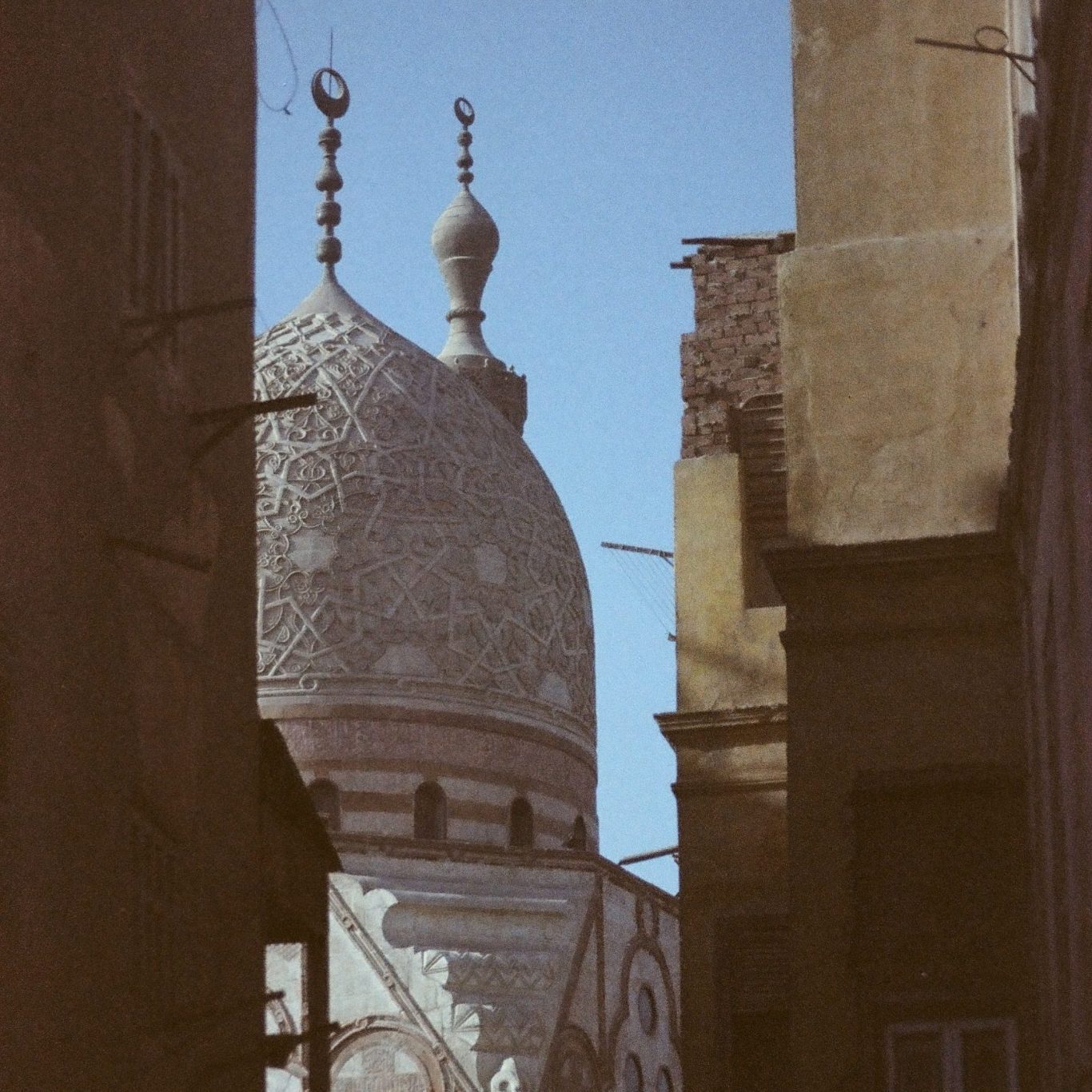
Sultan Qaitbay’s funerary complex dome, erected in 1474, is regarded as a jewel of Mamluk art. Credits : Martin Amrouche
Origins of al-Qarafa
The creation of the al-Qarafa necropolis dates back to the 7th century, following the Arab conquest of Egypt by ʿAmr ibn al-ʿAs. The name al-Qarafa is thought to derive from the Yemeni tribe of Banu Qarafa, former inhabitants of what would become the main cemetery of the Egyptian capital. When the city of al-Fustat (the precursor of modern Cairo) was founded, this area, nestled between the city and the Moqattam hills, was chosen to house a cemetery. Its desert terrain, unsuitable for habitation, had the advantage of accelerating the decomposition of bodies, thereby reducing the risk of epidemics.
Alongside the development of al-Fustat, the first administrative capital of Muslim Egypt—which was later supplanted by Cairo in the 10th century—the necropolis of al-Qarafa grew in importance and prestige as notable figures chose to be buried there. The construction of the mausoleum of Imam al-Shafiʿi, a Muslim scholar and founder of one of the four main schools of Sunni thought, in the 9th century transformed the site from a simple cemetery into a place of pilgrimage where believers and theologians gathered.
In Egypt more than elsewhere, tombs and necropolises carry a particular significance—the pyramids of Giza being the most striking example. The cemetery of al-Qarafa is no exception, as evidenced by the countless mausoleums and funerary complexes built by sultans, princes, and dignitaries, some resembling monumental palaces.
The City of the Dead: Between Tombs and Dwellings
During the Mamluk Sultanate (1250–1517), the northern section of the necropolis—separated from the southern part by the Citadel of Salah ed-Din—became the preferred burial place of sultans and dignitaries. Seeking to be well surrounded in the afterlife, they constructed lavish funerary complexes composed of mosques, schools, palaces, and workshops where students, theologians, officials, and artisans mingled. The funerary complex of Sultan Qaitbay (1416–1496), a masterpiece of Mamluk architecture, is a prime example, complete with a mosque, Islamic school, and residential quarters.
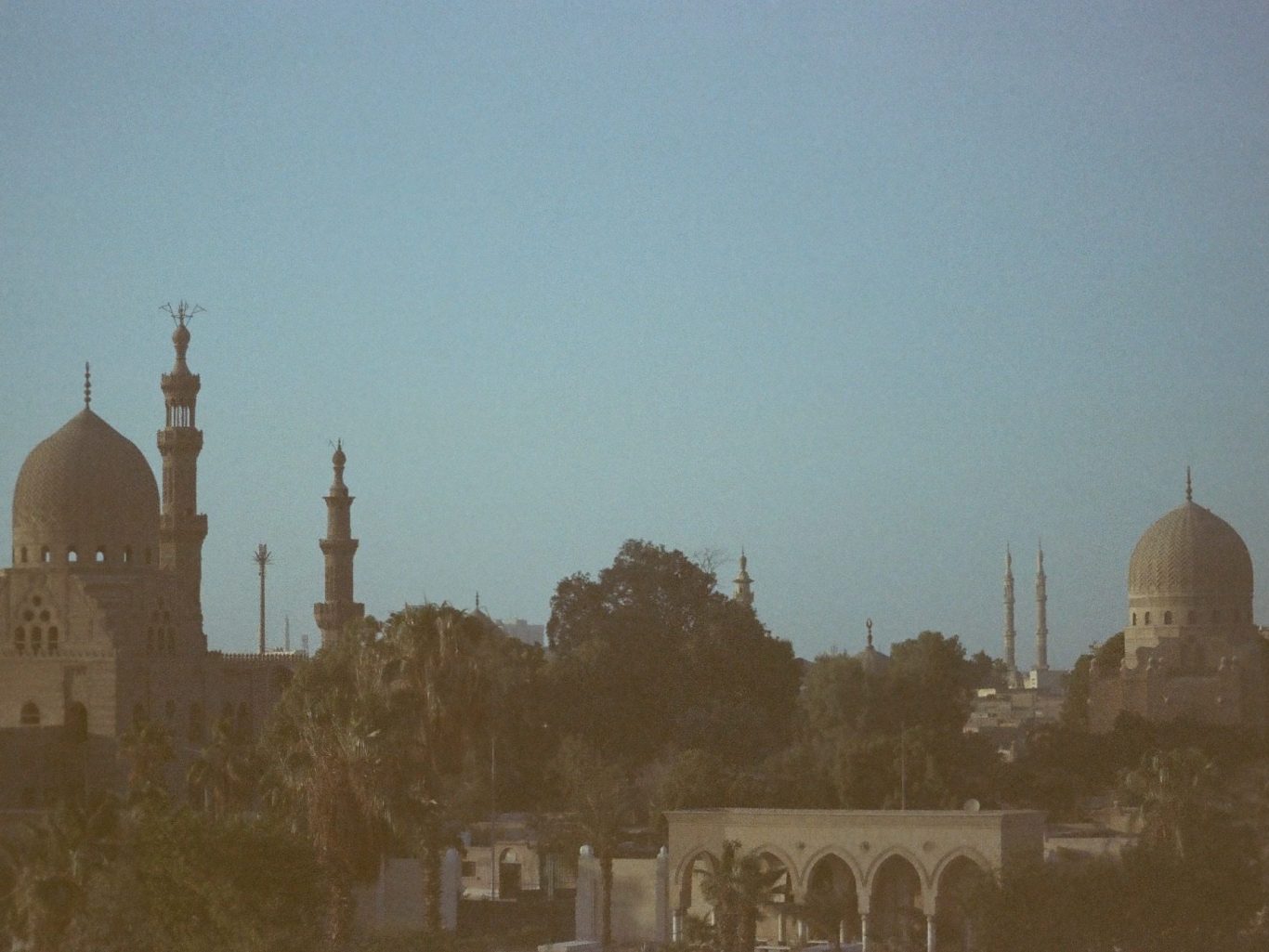
View of the northern cemetery, also known as the Mamluk Cemetery. Credits : Martin Amrouche
The enigmatic name “City of the Dead” by which it is often known is the result of this centuries-long coexistence between the living and the dead. Ibn Saʿid al-Maghribi, a 13th-century Andalusian historian and geographer, described the necropolis of al-Qarafa as a “beautiful dwelling for both this world and the next” in his travel chronicles.
As Cairo expanded into new districts, the City of the Dead gradually lost most of its residents. It was during Egypt’s industrialization in the second half of the 20th century, and the ensuing rural exodus, that the necropolis was repopulated. Once the leisure retreat and burial ground of medieval elites, the City of the Dead became home to poor rural migrants excluded from the benefits of industrial growth.
Cairo’s authorities, faced with a severe housing crisis for decades, have seen so-called “informal neighborhoods” multiply across the capital. This crisis has its roots in the privatization of housing, the result of President Anwar al-Sadat’s liberal “Infitah” (“open-door”) policies in the 1970s, which dismantled many of the welfare programs inherited from his predecessor Gamal Abdel Nasser.
The City of the Dead is emblematic of this crisis. In search of affordable housing in Cairo, many families turned to this quiet, isolated area. Where entire “residential islands” emerged alongside cemeteries, some families settled within the tombs themselves, which often include a courtyard and a covered room. While some descendants of the deceased gave their consent in exchange for upkeep of the site, others settled without authorization, having no alternative.
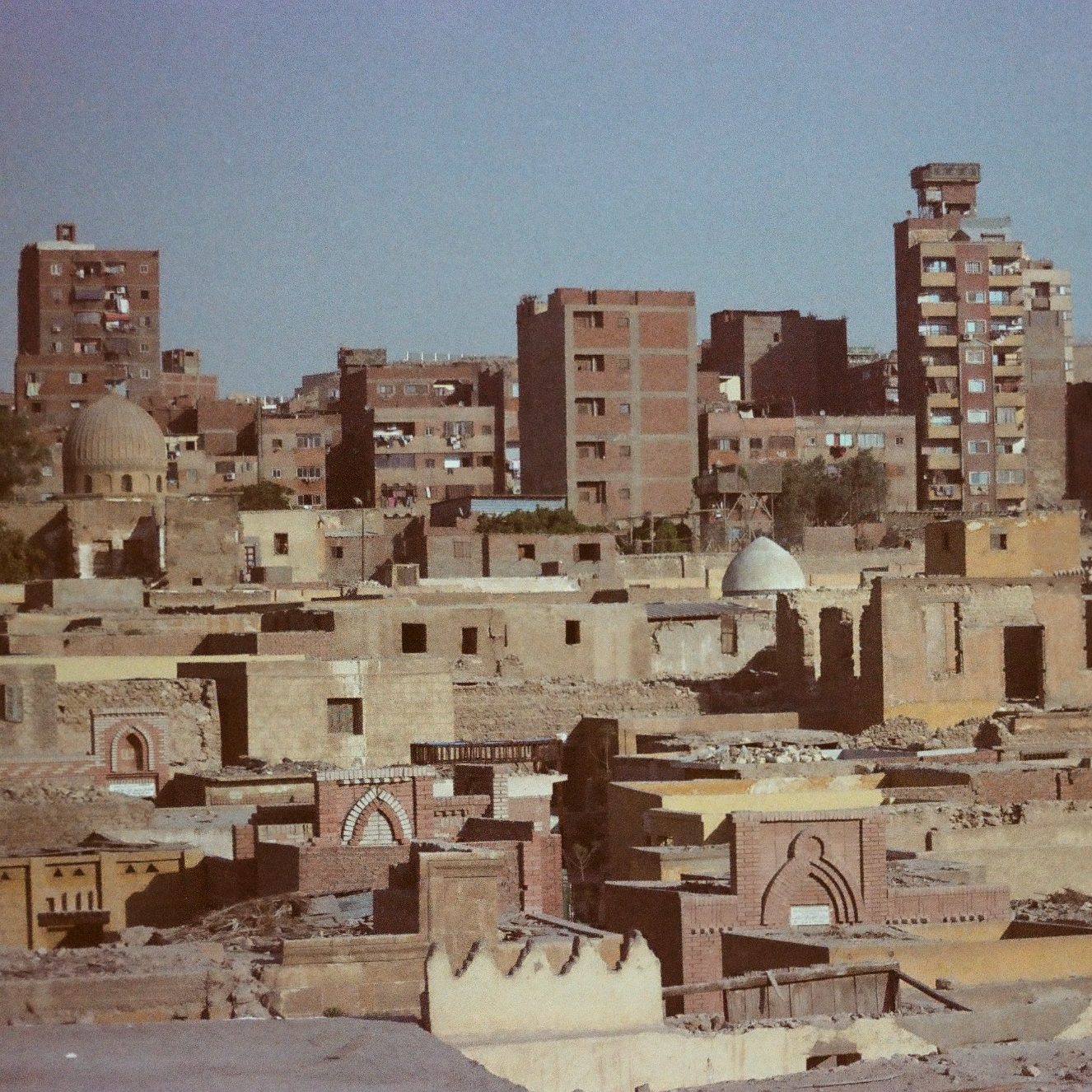
In the City of the Dead, apartment buildings and tombs sit side by side. Credits : Martin Amrouche
Since then, the district has developed and has been connected to basic services such as running water and electricity. Its population today is estimated at nearly 2 million people, spread between residential clusters and tomb dwellings. Residents of al-Qarafa are quick to point out the advantages of the neighborhood: its tranquility, central location, and sense of community. The City of the Dead resembles a peaceful village in stark contrast with Cairo’s sprawling, frenetic metropolis. Between its vibrant community life, craftsmanship, and the splendor of palaces and mausoleums, residents feel a strong sense of belonging and pride. With the likes of Said, caretaker of the Sultan Barquq mosque for 30 years, or Mohammed, a goldsmith for 25 years, it is not only the tombs that remain immutable in this place.
Yet it suffers from a negative reputation. The number of “grave squatters” has been largely exaggerated by the media, overshadowing the fact that most residents live in ordinary apartment buildings. As a result, the population of al-Qarafa is often marginalized by Egyptians and foreigners alike, who view it as dangerous—a perception belied by its negligible crime rates.
In recent years, several initiatives have sought to highlight al-Qarafa’s cultural importance. The European Union has financed several projects, worth nearly 2 million euros, to preserve the heritage and support craftmanship and economic activities in the northern necropolis. The MASQ project (“Multicultural and Artistic Space of Qaitbay”) has started organizing tours, markets, and concerts around Sultan Qaitbay’s funerary complex in the past few years, aiming to open up the area to tourism. The visit of Queen Letizia to the Qaitbay cultural center, during the Spanish king’s state visit in September 2025, symbolized a renewed interest in this long-neglected jewel of Cairo.
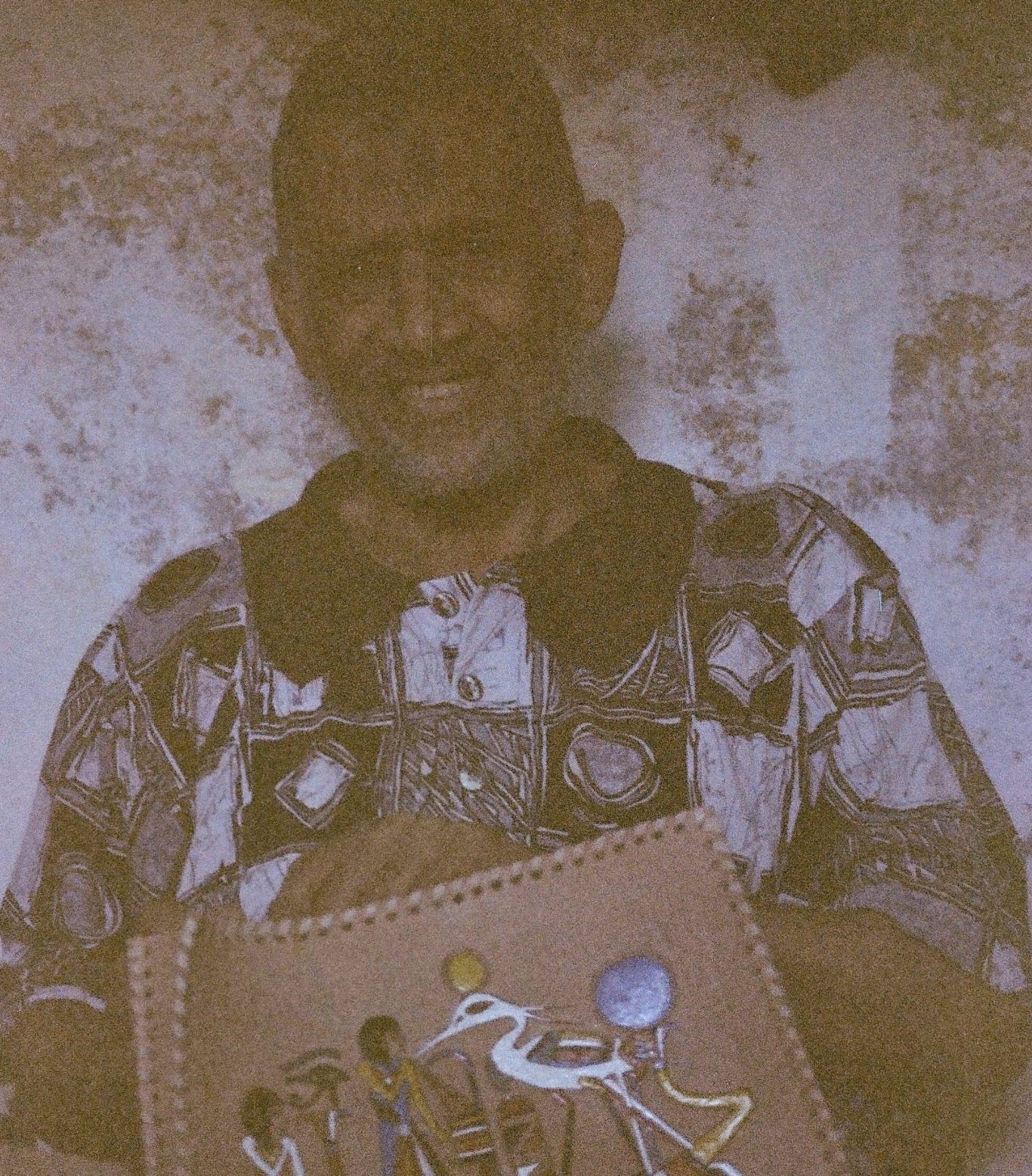
Ahmed, a longtime tanner in Cairo’s al-Qarafa district. Credits : Martin Amrouche
An imperiled heritage
Yet the revitalization of al-Qarafa’s northern section conceals the danger looming over the rest of the necropolis. In its drive to link the New Administrative Capital with “old” Cairo, the Egyptian regime has launched a vast highway infrastructure project stretching 50 kilometers. Situated midway between the two capitals, large sections of the necropolis are slated for imminent destruction. This project is part of Marshal al-Sisi’s “Vision 2030,” a massive urban development plan fueled by hundreds of billions of dollars since he seized power in a 2014 military coup. The construction of the New Administrative Capital from scratch epitomizes this gigantism that is presented as a way to lift Egypt out of poverty. In reality, the city—mockingly nicknamed “Sisi City” by Egyptians—is above all designed to shield the military regime, still haunted by the January 2011 Egyptian Revolution, by distancing the seat of power from popular neighborhoods.
Despite its designation as a UNESCO World Heritage site since 1979, al-Qarafa is threatened by the very authorities that are meant to safeguard and preserve it. Several hundred tombs have already been demolished since 2020, often at night to avoid attracting journalists’ attention or sparking residents’ anger. Questioned by UNESCO and civil society organizations, Egyptian authorities insist that only modern, non-historic tombs are targeted—claims contradicted by numerous reports documenting the destruction. In practice, only 102 of the nearly 2.5 million tombs in the cemeteries are officially classified as “historic,” allowing the government to dismiss concerns by concealing the importance of the tombs of major political and cultural figures.
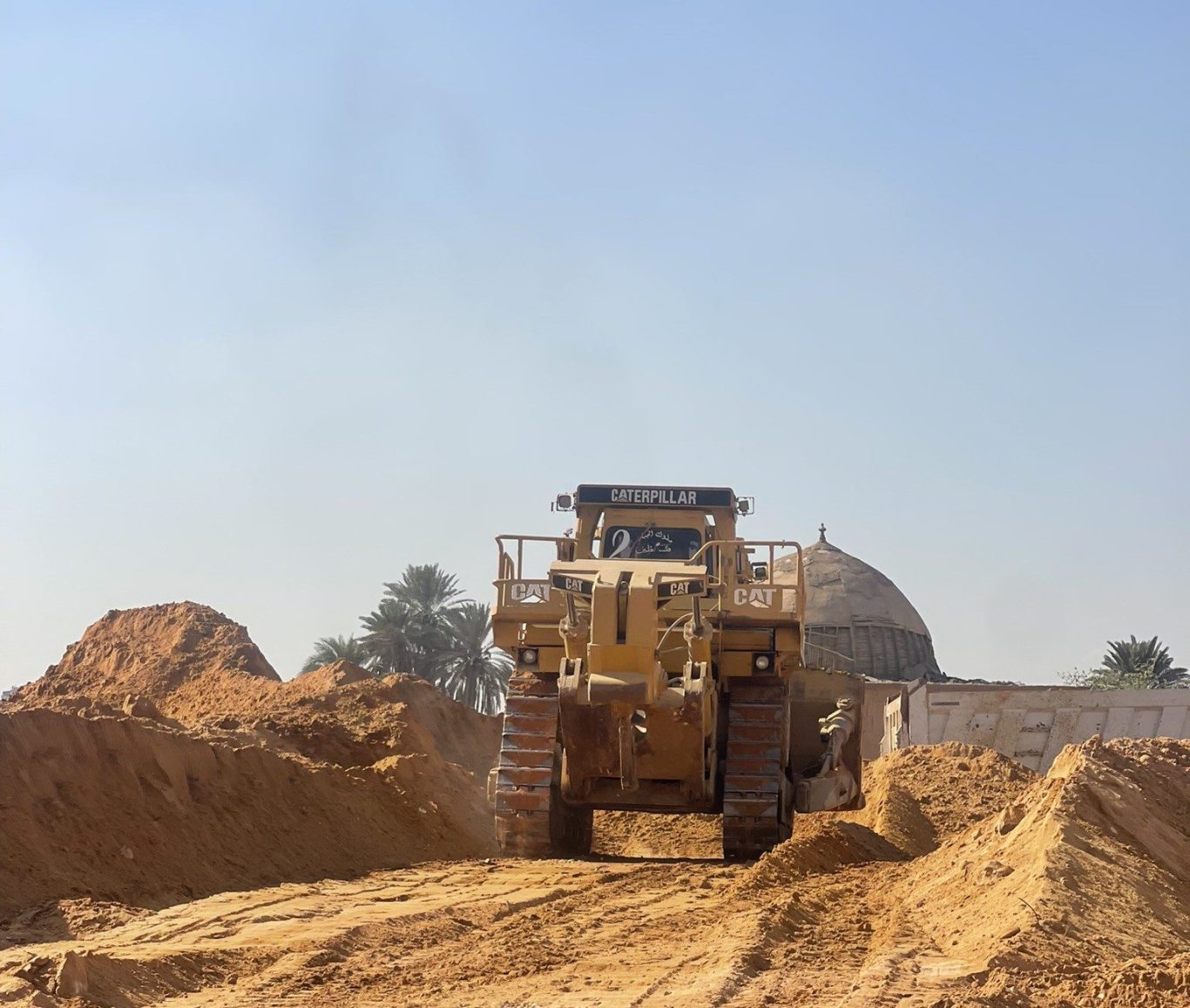
In the southern cemetery, mausoleums are gradually giving way to bulldozers. Credits : Greta Murgia
In response, petitions and condemnations have circulated on social media, with many Egyptians outraged to see their heritage trampled by their own government. Yet in a country where dissent is harshly repressed, such protests remained unheard. As a mere façade of compromise, al-Sisi agreed in 2022 to establish a panel of experts to supervise the demolitions. Eloquently, several members quickly resigned after their calls to stop the work were ignored.
Tragic as it is, the destruction of al-Qarafa is not an isolated case in Egypt. Prioritizing short-term profit and regime preservation over cultural heritage, the authorities show little regard for conservation. In this unique and irreplaceable district, it is not only the dead but also the living who thus face a brutal and permanent eviction.