Democracy under supervision: Bourguiba, Ben Ali, and Tunisia’s authoritarian legacy - 1/3
François Theri - 20/04/2026.
On December 17, 2010, Mohamed Bouazizi set himself on fire in front of the governorate headquarters in Sidi Bouzid. Within weeks, his act ignited Tunisia, and then the Arab world. For many observers, the revolution that followed represented a historic rupture: the fall of Ben Ali opened a decade of democratic hope, before Kaïs Saïed gradually closed this parenthesis starting in 2021. But a rupture with what, exactly?
Since its independence in 1956, Tunisia has known only one logic of power: a strong, centralized state embodied by a single man. Bourguiba first, for thirty years. Then Ben Ali, for twenty-three years. And today Saïed, who reproduces with striking fidelity the reflexes of his predecessors: a tailor-made Constitution, a criminalized opposition, a people summoned but never truly consulted. In the meantime, the brief democratic experience of the 2010s appears less as the culmination of a transition than as an anomaly in continuity.
More than a decade after the revolution, Tunisia’s trajectory appears marked by new forms of repression. Under the presidency of Kaïs Saïed, elected in 2019 and re-elected in 2024, several political and intellectual figures have been sentenced to heavy prison terms, in a context of increasing authoritarianism and the erosion of democratic gains. At the same time, the economic situation continues to deteriorate, with persistent inflation, shortages, and an irreversible brain drain.
Understanding what Tunisia is becoming again therefore requires revisiting what it may never have ceased to be: a state built around a leader, whose claimed modernity has always served, at least in part, to justify authoritarianism. It is this genealogy that this article seeks to trace: from Bourguiba to Ben Ali, from the foundations of independence to the early stages of the revolution.
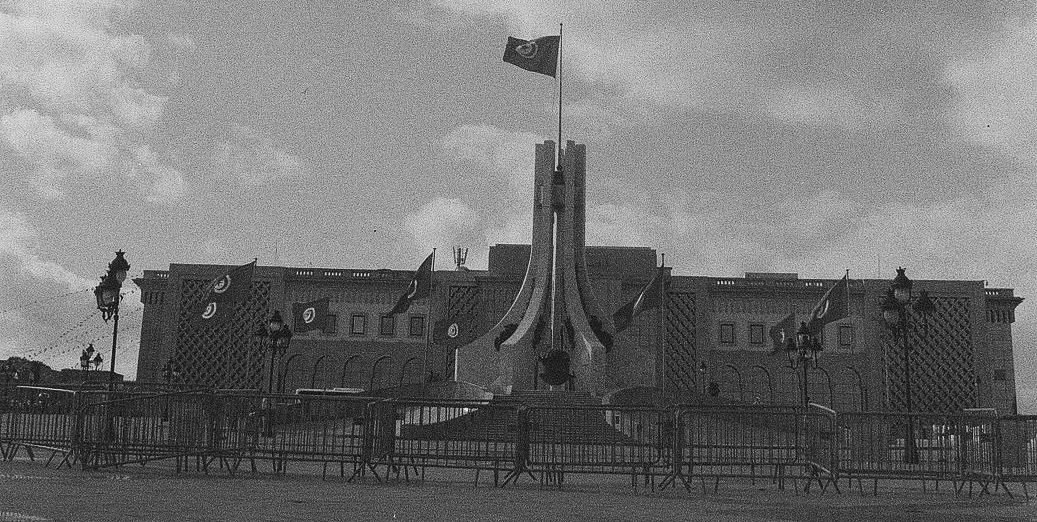
National monument of the Kasbah, Tunis. Credits: Martin Amrouche.
Bourguiba, or the nation as a personal project
Tunisia freed itself from colonial rule along a trajectory that was unique within the Maghreb. The leader of the Neo-Destour party, Habib Bourguiba, gradually established himself as the leader of the new Tunisian nation, without this accession to power being fully describable as democratic.
The first milestones of the independence movement appeared as early as the 1920s, with initial mobilizations against colonial rule and the creation of the Destour party. In 1934, an internal split led Bourguiba to found the Neo-Destour, breaking with the traditional elites close to the Bey, heir to Ottoman-era monarchical power. This new party favored a political mobilization strategy based notably on the press, public opinion, and armed struggle.
During the Second World War, Tunisia fell under the control of Vichy France, which sought to neutralize Bourguiba by deporting him. He was successively imprisoned and then transferred to Italian authorities. At the end of the conflict, he briefly returned to Tunisia before being exiled again in 1952 due to his commitment to independence.
His triumphant return on June 1, 1955 marked a decisive turning point: he secured assurances that French authorities would support a process of national autonomy. This dynamic led to the proclamation of independence on March 20, 1956, although it initially remained supervised. The consolidation of the Tunisian state continued with the abolition of the beylical monarchy on July 25, 1957, followed by the adoption of the 1959 Constitution, which established a centralized and secular regime.
However, this political construction did not occur without internal tensions. Tunisia was shaped by competing influences—religious, pan-Arab, as well as trade unionist and internationalist—embodied notably by Salah Ben Youssef. Initially a close ally of Bourguiba, he became within a few years one of his most vocal opponents. Despite these divisions, Bourguiba managed to impose a pragmatic line and to unify, at least temporarily, the various political forces in the struggle against colonial rule. What distinguished him from his Arab peers of the 1950s was this singular political thought, not anchored in any internationalist movement (neither Western, communist, nor pan-Arab).
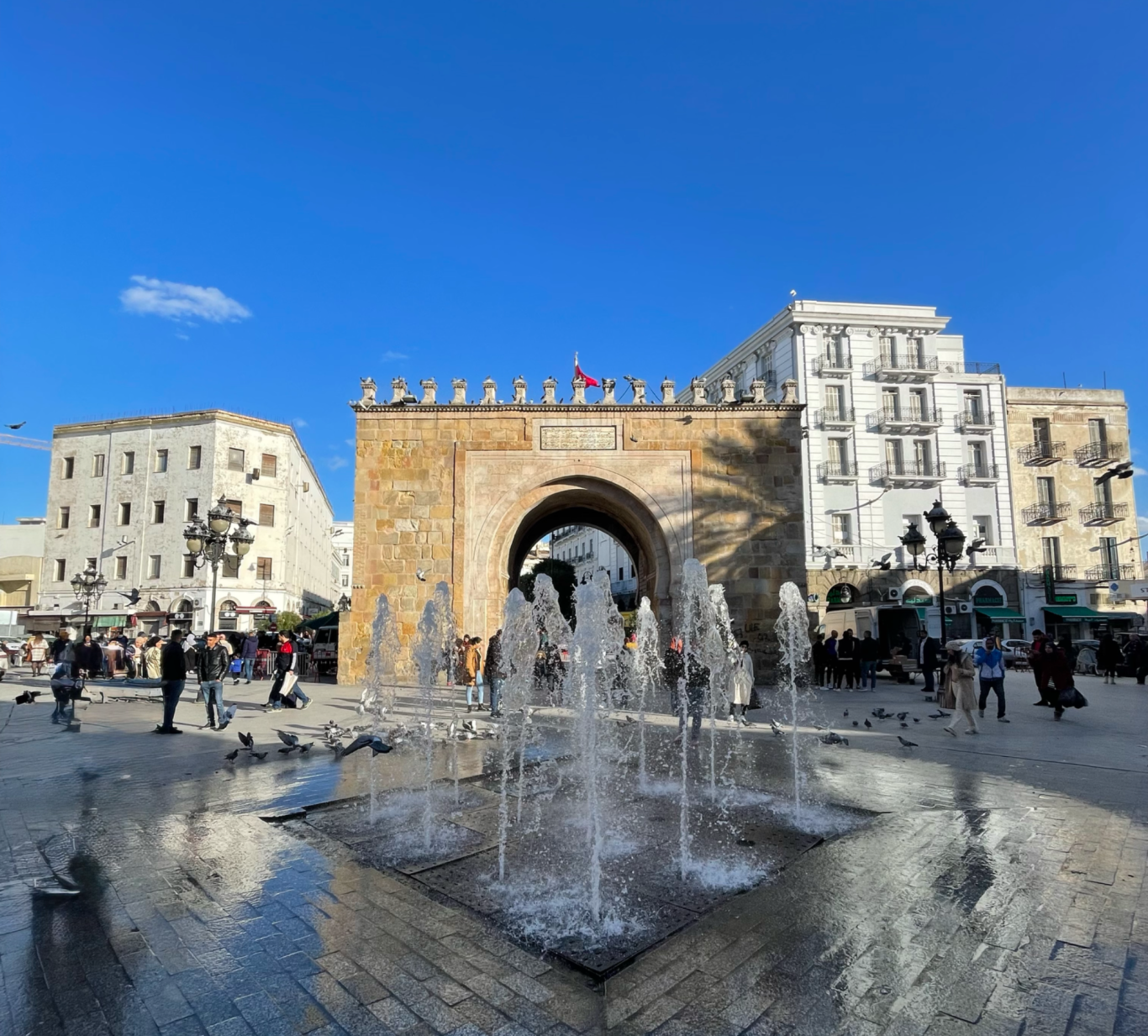
Bab el Bahr, Tunis. Credits : Victor Jardin
An authoritarian and pragmatic modernism
This political thought was structured around three main pillars: nationalism, socialism, and democracy, all embedded in a pragmatic logic of state-building and modernization.
Bourguibian nationalism was above all a project of state construction, based on the centralization of power and national unity. It aimed to transcend internal divisions, whether ideological (pan-Arabism, Islamism) or social, in order to consolidate a modern state. Bourguiba thus opposed figures such as Salah Ben Youssef or Habib Thameur, who represented competing political alternatives in Tunisia advocating pan-Arabism and socialism respectively. His objective was not military confrontation with colonial rule, but a gradual independence based on negotiation and institutional construction. This nationalism translated into profound reforms: abolition of the monarchy, establishment of a presidential system, secularization of law, social modernization (notably through the Personal Status Code), and state control of religion. Bourguiba adopted a singular posture by presenting himself as an interpreter of Islamic law in order to legitimize progressive reforms.
However, this nationalism did not entail a rejection of the West. On the contrary, Bourguiba advocated a pragmatic approach based on selective assimilation of European models. He viewed contact with the West as a lever for modernization and emancipation. This position was particularly evident during the Second World War, when he anticipated an Allied victory and favored a strategy of cooperation with France. He thus theorized an independence achieved in stages, ruling out direct confrontation due to the imbalance of forces.
Socialism constituted the second pillar of his thought. It was not an ideological socialism, but rather an instrument serving social justice and development. Bourguiba sought to correct inequalities through public policies: agrarian reform, access to education and healthcare, and economic planning. However, the collectivist experiment of the 1960s quickly revealed its limits, leading to a pragmatic readjustment. He rejected imported models and favored an approach adapted to the Tunisian context, based on an “authoritarian corporatism” combining state intervention and controlled participation. Bourguibian socialism thus aimed at economic and social modernization, while emphasizing the transformation of mentalities, particularly through education and the emancipation of women.
Democracy, for Bourguiba, was conceived as a gradual and conditional objective. While he affirmed his attachment to democratic principles, he believed they had to be adapted to the realities of a nation under construction. Priority was given to national unity and stability, justifying the use of a single-party system and the limitation of political pluralism. Popular participation was encouraged, but within a framework controlled by the state and the party. Bourguiba defended an elitist vision of democracy, considering that the people first needed to be educated before they could fully exercise their sovereignty. Schools thus became a central instrument for shaping citizens and consolidating the nation.
This philosophy rested on a balance between pragmatism and authority: a modernizing nationalism, a socialism adapted to local realities, and a democracy conceived as a long-term horizon. This model aimed to build a stable and modern state, while tightly controlling political expression.
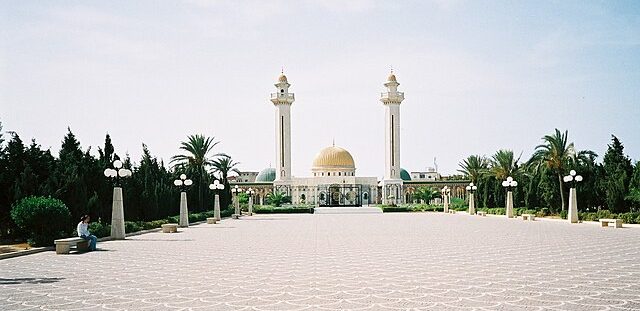
Mausoleu of Habib Bourghiba, Wikimedia commons.
A model based on the triptych of leader, state, and people
Political personalism constituted a central dimension of both the thought and practice of power under Habib Bourguiba. It rested on the idea that the leader embodied the nation, legitimized by his role in the struggle for independence. This conception followed a logic in which the figure of the leader became inseparable from the state itself. Bourguiba thus constructed a political narrative in which he appeared as the guarantor of the people’s aspirations, without necessarily relying on formal mechanisms of popular consultation. He notably claimed that the people’s trust had naturally brought him to power, suggesting an almost spontaneous and direct legitimacy.
This personalization of power was accompanied by a form of political paternalism. Bourguiba believed that a strong leader was essential to protect a nation still fragile in the aftermath of independence. He thus justified the concentration of power by the need to stabilize institutions and modernize the country. In this perspective, the authority of the leader transcended traditional legal frameworks: the legitimacy of the state was built around his person, not the other way around. As François Siino, a CNRS researcher and specialist in Bourguibian rhetoric, points out, Bourguiba’s leadership tended to position itself above the rule of law, embodying a form of political transcendence.
Personalism thus became an instrument of national unification. In a context marked by internal divisions and the legacy of traditional structures, Bourguiba believed that a strong center of authority was necessary to prevent fragmentation. He framed his action within a historical narrative in which Tunisia’s past failures resulted from a lack of unity. He therefore positioned himself as the one inaugurating a new political cycle, based on a controlled temporality oriented toward progress. Independence and the country’s successes were thus presented as the result of unity around his person, rather than a collective project.
However, this logic carried a major risk: the cult of personality. By presenting himself as the sole architect of national liberation, Bourguiba marginalized other actors of the independence movement. He fostered the idea of the leader’s irreplaceability, even envisioning a presidency for life. Although he occasionally acknowledged his limitations and the need for Tunisia to move beyond him, he nonetheless contributed to building a political system heavily dependent on his person.
This paradox lies at the heart of the Bourguibian model: while seeking to build a modern and durable state, he concentrated its foundations around individual leadership. The sustainability of the state after his disappearance thus became uncertain. Bourguiba’s political personalism appears both as a factor of mobilization and stabilization in a postcolonial context, but also as a structural limitation to the institutionalization of a pluralistic and autonomous political system.
Ben Ali, or continuity without the charisma of the founding father
The dynamics that enabled Habib Bourguiba to come to power in Tunisia became sources of fragility from the 1970s onward. Bourguiba neglected economic balances, which eventually caught up with him, forcing him to explore new strategies to secure resources: rapprochement with Libya, attempts to exploit oil resources, and the development of petrochemical industries, particularly in Gabès. At the same time, the authoritarian nature of presidential power provoked growing opposition, especially from trade unions and student movements, which denounced an outdated system. Meanwhile, Bourguiba’s historical companions were gradually sidelined in favor of a small circle of advisors. This loss of legitimacy paved the way for his successor, Zine El-Abidine Ben Ali, who orchestrated a “medical coup,” as described by political scientist Michel Camau, author of The Authoritarian Syndrome. On November 7, 1987, Ben Ali thus acceded to the presidency, in a logic of continuity marked nevertheless by a strengthening of political repression against opposition forces.
What fundamentally distinguishes the two leaders lies in their relationship to the security apparatus. Whereas Bourguiba relied primarily on his charisma and historical legitimacy, Ben Ali favored a sophisticated security system designed to monitor and control all opposition. A former Minister of the Interior, he also understood that consolidating his power required close economic alliances. He therefore established a system of co-optation based on his family circle, notably the Trabelsi family, linked to his wife. Of Libyan origin, she quickly came to occupy a central role in the Tunisian economy, at the heart of power networks.
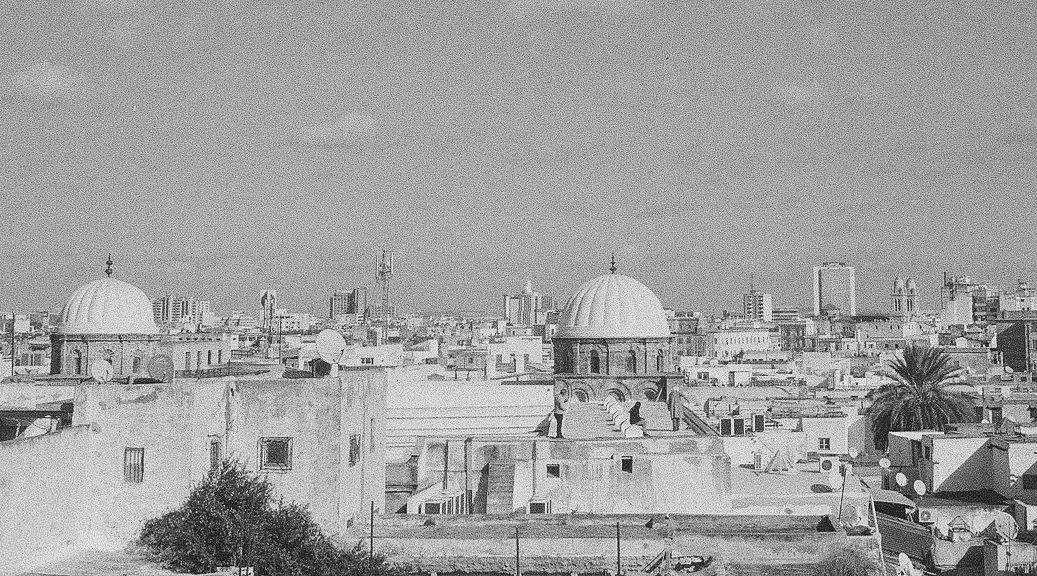
View of the medina of Tunis. Credits: Martin Amrouche.
Thus, Tunisia’s trajectory appears caught in a persistent tension: on the one hand, a model structured around a strong leader carrying a modernization project inspired by Western standards; on the other, a form of political deadlock linked to the difficulty of conceiving and organizing the state sustainably outside this founding figure. In other words, how can Tunisia be built beyond the individual who embodied and partly shaped ts modern nation?
The model established by Habib Bourguiba, based on modernizing authoritarianism and personalized leadership, laid the foundations for a centralized state with limited political pluralism. This framework was later extended and reinforced under Zine El-Abidine Ben Ali, whose regime deepened the security and economic dimensions of authoritarianism. The 2011 revolution seemed to open a phase of democratic transition, marked by the emergence of new forms of political participation and a redefinition of the relationship between state and society.
Nevertheless, developments observed under Kaïs Saïed suggest a return to logics of power centralization, in a context of persistent economic and institutional fragility. Far from constituting a complete rupture, the current period appears to prolong certain historical dynamics specific to Tunisia.
The question therefore remains open: has Tunisia’s democratic experience durably transformed political practices and social expectations, or are we witnessing the reactivation of a deeply rooted authoritarian cycle? The country’s political future will largely depend on the capacity of social and institutional actors to move beyond this legacy and to construct a renewed balance between state authority and citizen participation.