Palestine votes: new coalitions, old vetoes
Houssam Mehfara - 07/09/2026.
Twenty years after the last Palestinian legislative election, voters are due to return to the polls on 28 November. Yet behind the promise of democratic renewal lies an unprecedented political landscape: Hamas, Islamic Jihad and several Fatah dissidents have joined forces against Mahmoud Abbas, without overcoming their deep divisions. With Israel able to block the process, the Palestinian Authority capable of postponing the vote, and Europe facing the legacy of 2006, the election remains deeply uncertain. Beyond the outcome itself, what is at stake is whether Palestinians can regain control over their own political institutions.
On 9 July, Mahmoud Abbas signed a decree setting 28 November as the date of the first Palestinian legislative elections in twenty years. The last time Palestinians voted for a parliament, in January 2006, Hamas took 74 of 132 seats and Europe responded by cutting off the government it had helped bring into being. Two decades later the ballot is returning under conditions no one would have designed, and the coalition assembling to contest it would have been unthinkable in almost any other year.
After weeks of meetings in Cairo, Hamas, Palestinian Islamic Jihad, the Democratic Reform Current led by Mohammed Dahlan, Nasser al-Qudwa’s National Democratic Forum and the Popular Resistance Committees announced an Alliance of National Forces to run on a single list. Fatah’s leadership has ruled out any joint slate and will field its own. The Palestinian Central Elections Commission reports that 87.2% of eligible voters in the West Bank have registered, more than 1.62 million people. Campaigning is scheduled to open on 6 November.
What deserves attention is less the arithmetic of the list than the political logic that produced it, and the question of who retains the power to stop the exercise altogether.
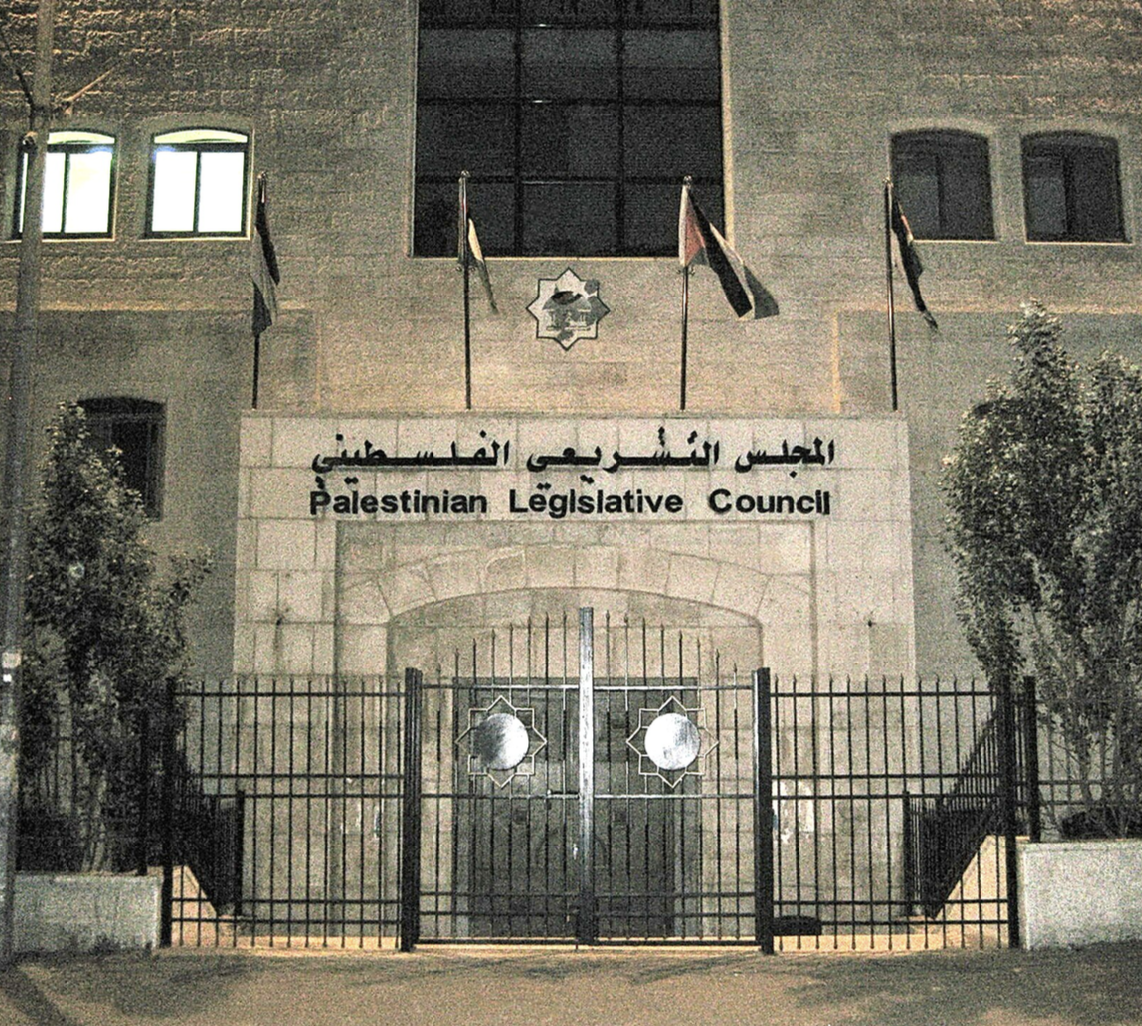
Le Conseil législatif palestinien à Ramallah. Élue en janvier 2006, l'assemblée n'a plus siégé comme parlement effectif depuis la scission de 2007. Les Palestiniens retournent aux urnes le 28 novembre 2026. (Photo : Magister, CC BY-SA 3.0, via Wikimedia Commons)
The enemy who became a partner
Consider who Hamas has agreed to run alongside. Dahlan built his career as the first head of the Preventive Security Service in Gaza, the apparatus that conducted the mass arrests of Hamas and Islamic Jihad cadres in the late 1990s and that fought the movement in the streets in 2007. Expelled from Fatah in 2011 and resident in Abu Dhabi since, he has spent fifteen years as the name most often floated in foreign capitals as the man who might run a post-Hamas Gaza. The scenario has been sketched in enough briefing papers to be familiar: a strongman acceptable to Israeli, Egyptian, Emirati and American interlocutors, installed over a territory reduced to its security dimension.
That Hamas has now sat down with him tells us something about the pressure both men are under. Sources close to the talks say Dahlan helped persuade Hamas to accept the American framework for Gaza and undertook to seek Washington’s and Europe’s acquiescence in the movement’s electoral participation. For Hamas, the alliance offers a route back into the political system without recognizing the Oslo agreements or surrendering its weapons to the Palestinian Authority. For Dahlan, it offers what exile has denied him: a domestic constituency.
The interesting question is not whether such a partnership is cynical. Most electoral coalitions are. It is why Hamas can bury a rivalry with the architect of its persecution in Gaza while remaining unable to reach any settlement with Abbas. If historic enmities can be suspended when circumstances demand, the principle ought to apply generally rather than selectively. What has been assembled in Cairo is a coalition defined by opposition to one man in Ramallah. A Palestinian figure present at the meetings put it to the Israeli press without embellishment: the aim is to end Abbas’s dominance.
Ramallah has read the signal accurately. A senior Fatah delegation including Hussein al-Sheikh and Majed Faraj travelled to Cairo within days, and Fatah representatives met Dahlan’s people at El Alamein. The purpose, according to analysts following the talks, was to detach Dahlan from the alliance rather than to negotiate any wider reconciliation.
Assembling names on a list does not mean the disputes are over. It means the disputes have found a new arrangement.
Islamic Jihad and the Oslo question
Islamic Jihad’s position repays close reading, because it exposes what the elections can and cannot resolve. The movement has joined the alliance while announcing that it will field no candidates of its own. Mohammed al-Hindi, its deputy secretary-general, has said the elections in their present form do not meet Palestinian aspirations, has called the format a curtailment of the right to self-determination, and has formally requested a postponement pending a national consensus on reforming the PLO.
This is not evasion. Islamic Jihad has refused since its founding to enter institutions produced by Oslo, on the argument that the Legislative Council and the presidency exist by permission of an occupying power. During the war the movement fought alongside Hamas without hesitation, because armed confrontation required no position on the legitimacy of the Authority. Elections require exactly that position. Moving from the battlefield to the ballot means accepting a framework the movement has spent thirty years rejecting.
Backing an agreed national list while refusing to stand under its own name lets Islamic Jihad have the presence without the commitment. It keeps room to maneuver and spares the movement the questions that formal participation would put to its base. It also tells us the alliance is thinner than its founding statement suggests.
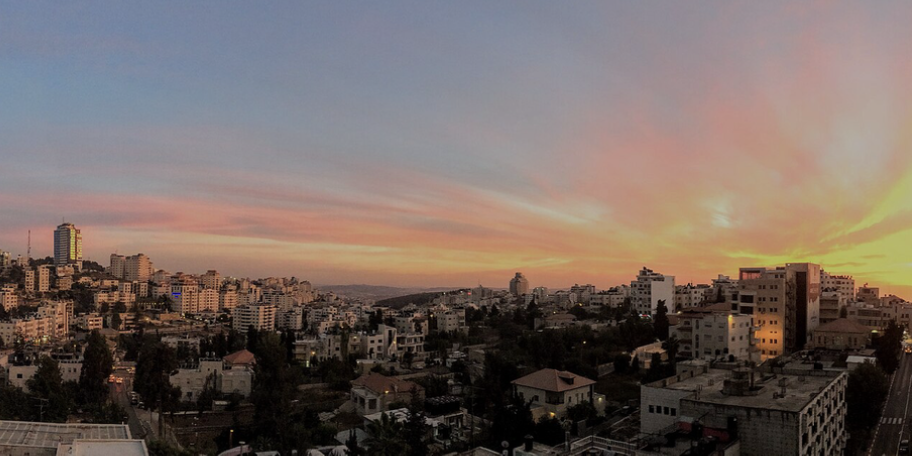
Ramallah au crépuscule. Siège de l'Autorité palestinienne, et cible d'une coalition électorale assemblée au Caire par des mouvements qui ne s'accordent guère que sur leur opposition à son président. (Photo : Fjmustak, CC BY-SA 4.0, via Wikimedia Commons)
Who decides whether Palestinians vote ?
Every calculation above assumes the vote takes place. Two actors can prevent it.
The first is Israel. Benjamin Netanyahu has said repeatedly that Hamas will not return to governing Gaza in any form. The relevant question is therefore not whether Israel would recognize the results, but whether it will permit a political process in Gaza at all, and whether it will allow voting in East Jerusalem. The 2021 elections died on precisely that point: Abbas cancelled them citing Israel’s refusal to permit voting in Jerusalem, a justification widely read in the West Bank as cover for Fatah’s fear of losing. In July 2024 the Knesset voted 68 to 9 against the establishment of a Palestinian state even through negotiation. A parliament that will not countenance Palestinian statehood is unlikely to welcome a Palestinian parliament that includes Hamas.
The second is Abbas himself. He has postponed elections in 2010, 2014, 2018 and 2021. He is 90 years old, has governed by decree since 2007, and now faces a coalition assembled explicitly to remove his movement from power. The mechanisms for another postponement are already in his hands, and Islamic Jihad has helpfully requested one.
This makes the election an object of the conflict rather than an instrument for settling it. If the ballot produces a leadership Israel finds unacceptable, the result will be contested by means that have nothing to do with counting votes.
Europe's 2006 problem returns
For European policymakers this is not an unfamiliar situation. It is the same situation, with the same actors, and Europe’s conduct last time is a matter of record.
In 2006 the European Union, as a member of the Quartet, made continued assistance conditional on the incoming Hamas government recognizing Israel, renouncing violence and accepting previous agreements. When those conditions went unmet, Brussels suspended direct aid and constructed the Temporary International Mechanism to route money around the government Palestinians had elected. Israel withheld the customs revenues it collects on the Authority’s behalf and detained eight ministers and thirty-three members of the Legislative Council. Within eighteen months Palestinians had two governments, one with a mandate and one with international recognition, and the split that followed has outlasted every reconciliation agreement signed since: Cairo, Mecca, Sanaa, Doha, Gaza, Algiers.
The lesson European capitals drew was that Palestinian democracy produces inconvenient outcomes. The lesson Palestinians drew was that European support for elections is contingent on the winner.
Something has shifted since. Spain, Ireland, Norway, Slovenia, France and the United Kingdom have extended recognition to the State of Palestine. Recognition of a state carries an implication about that state’s institutions: a government requires a legislature, and a legislature requires an election that the recognizing powers accept. If Europe recognizes Palestine and then treats the results of a Palestinian vote as conditional on the identity of the victors, the recognition means very little.
Three positions are now available to Brussels, and it will take one of them by default if it does not choose deliberately.
It can restate the Quartet conditions and prepare to isolate whatever emerges from 28 November. This has the merit of consistency and the defect that it has already been tried, with results visible in the ruins of Gaza.
It can support the electoral process and engage with its outcome, including a Legislative Council in which Hamas holds seats through a broad national list, while continuing to hold the movement to international humanitarian law. This is the position most European diplomats will privately concede is the only one with a future, and the one their governments are least likely to adopt.
Or it can say nothing until the vote is prevented, and then express concern. Given the record, this remains the likeliest outcome.
Recognition of a Palestinian state is a statement about institutions. Institutions require elections whose results are accepted before they are known.
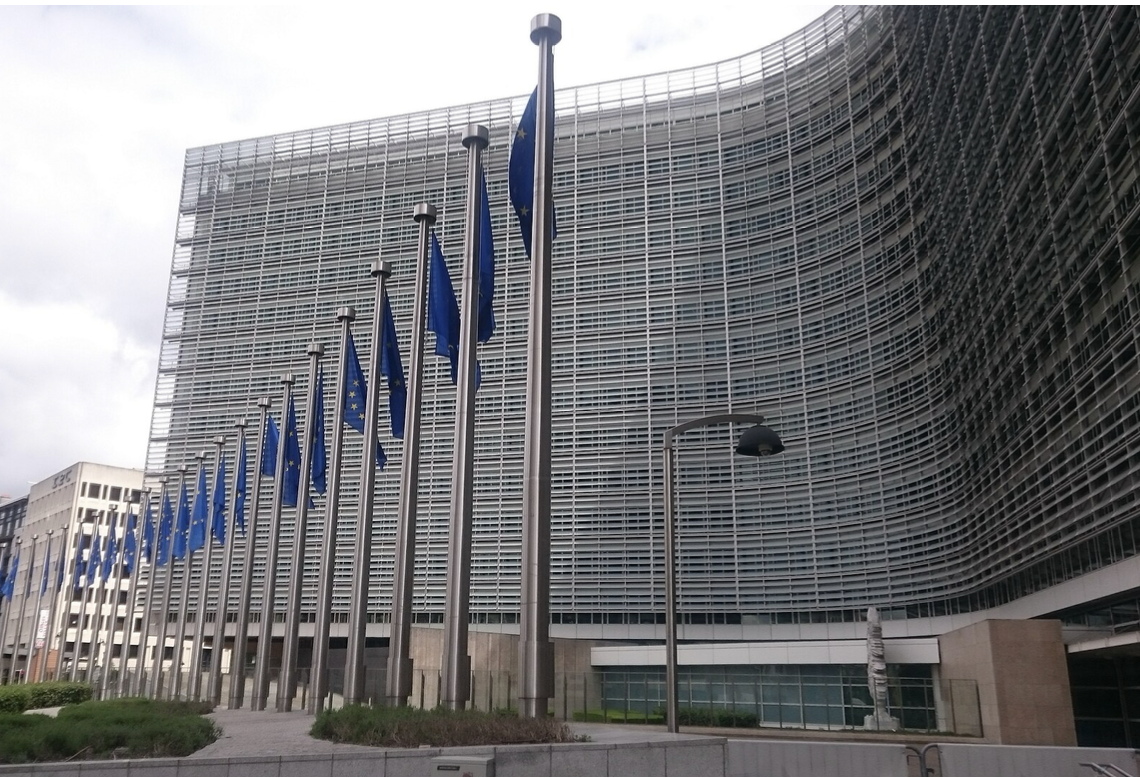
Le bâtiment Berlaymont, siège de la Commission européenne à Bruxelles. En 2006, l'Union suspendait son aide directe au gouvernement élu par les Palestiniens et bâtissait un Mécanisme international temporaire pour le contourner. (Photo : KenSwe72, CC BY 4.0, via Wikimedia Commons)
A coalition is not a reconciliation
None of the maneuvering in Cairo has addressed the substance of the division. A single list containing Hamas, Islamic Jihad and two dissident Fatah currents does not constitute a national agreement on how Palestinians are governed, who holds the weapons, or what the relationship with the occupying power will be. It constitutes an electoral vehicle aimed at Abbas. Should it win, its members will discover that they agree on very little beyond their opponent.
A genuine settlement would require Fatah and Hamas at the same table, along with Islamic Jihad, the Popular Front and the currents around Dahlan and al-Qudwa, addressing questions that the alliance has deferred: the structure of the political system, the mechanism for national decisions, the status of armed factions, and the reform of a PLO hollowed out by the very Authority it brought into being.
That conversation is not happening. What is happening is a rearrangement of alliances ahead of a contest that may not occur, watched by European governments who have recognized a state whose parliament they may again decline to accept.
The 28th of November could open a route out of twenty years of paralysis. It could also reproduce the division in an unfamiliar configuration. Which of these it becomes depends only partly on Palestinians.